
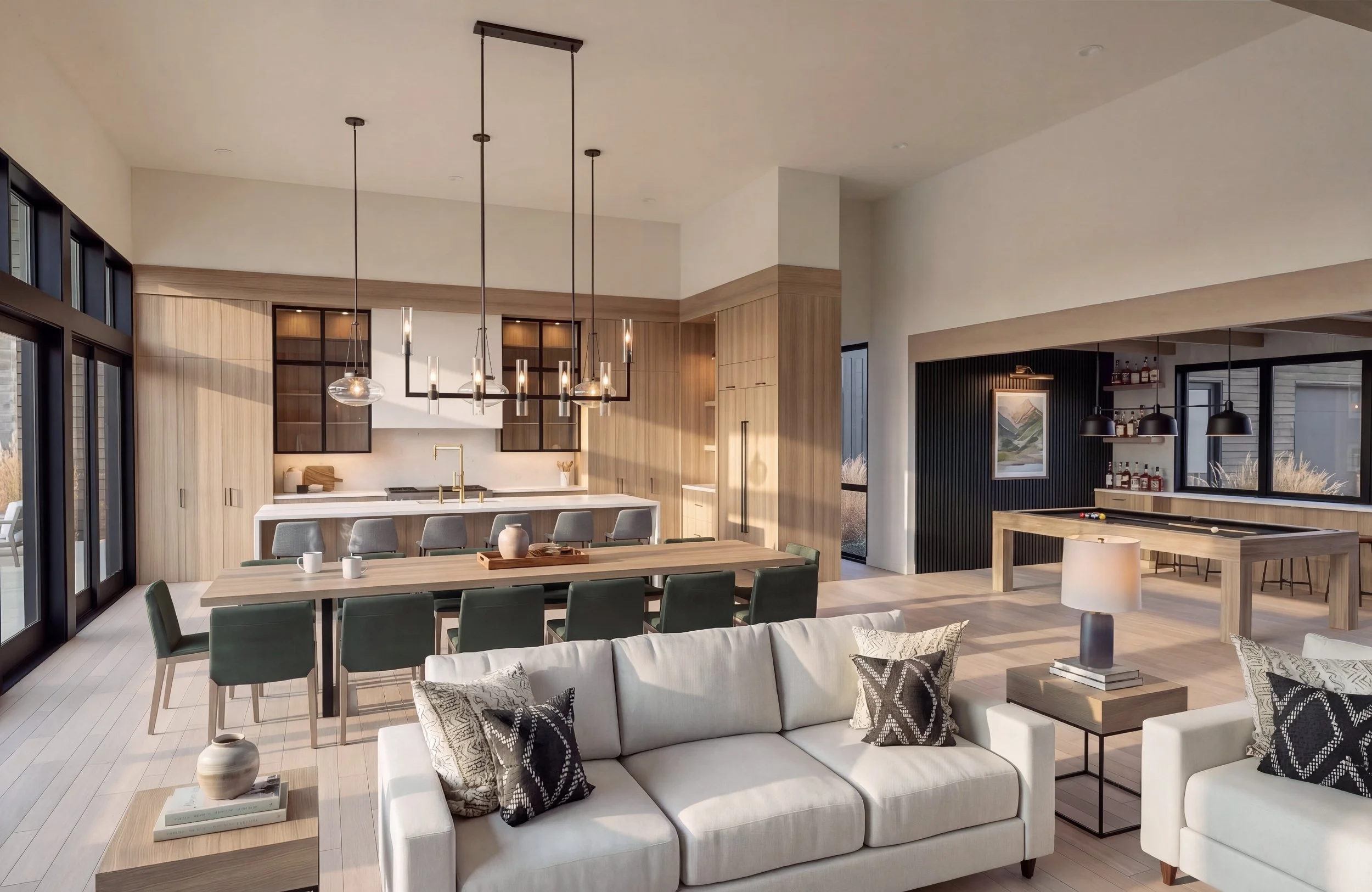
Better Together: Why Architecture and Interior Design Belong in One Room
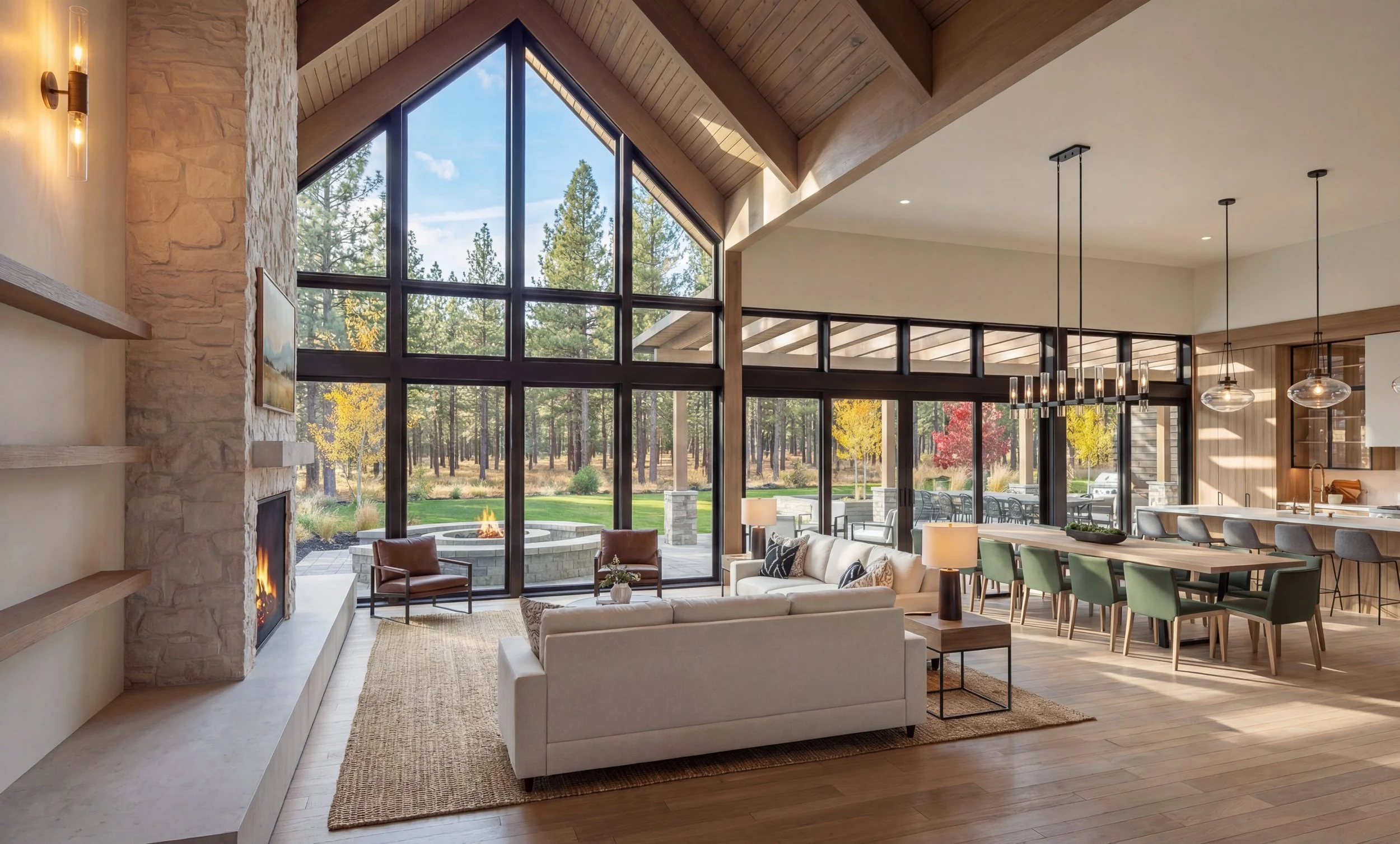
The Meadows House in Tumble Creek at Suncadia by Terralite Design
Building a custom home is often described as a journey, but for many homeowners, it feels more like acting as a high-stakes mediator between two different worlds. In the traditional model, you hire a designer to create the shell of the house and then, months later, bring in an interior designer to make it livable. It is a process that practically invites friction. Decisions made in a vacuum often lead to compromises during construction, and the result is frequently a house that feels like two good ideas that never quite learned how to have a conversation.
At Terralite Design, we decided long ago to skip that awkward middle phase. We believe that the exterior of a home and the life lived inside it are part of the same story. By offering both residential design and interior design services under one roof, we ensure that the narrative remains consistent from the first sketch to the last light fixture. Whether we are working on a steep-slope site in Snoqualmie Pass or a lakeside retreat in Coeur d'Alene, our goal is a singular, cohesive vision.
The Problem with the Great Divide
When the structural design and the interior design are handled by different firms, the homeowner often ends up as the primary point of communication. You find yourself relaying technical details about window headers to the person choosing your drapery, or worse, realizing that the perfect kitchen island layout won't work because a structural post is exactly where the range was supposed to go.
These conflicts are not just annoying; they are expensive. Change orders during construction are the natural enemy of any budget. When a design professional and an interior designer are not in the same room from day one, things get missed. Lighting plans might not align with furniture layouts. Floor transitions might feel clunky. The home might look beautiful in a photo, but it lacks that effortless flow that comes from intentional, unified planning.
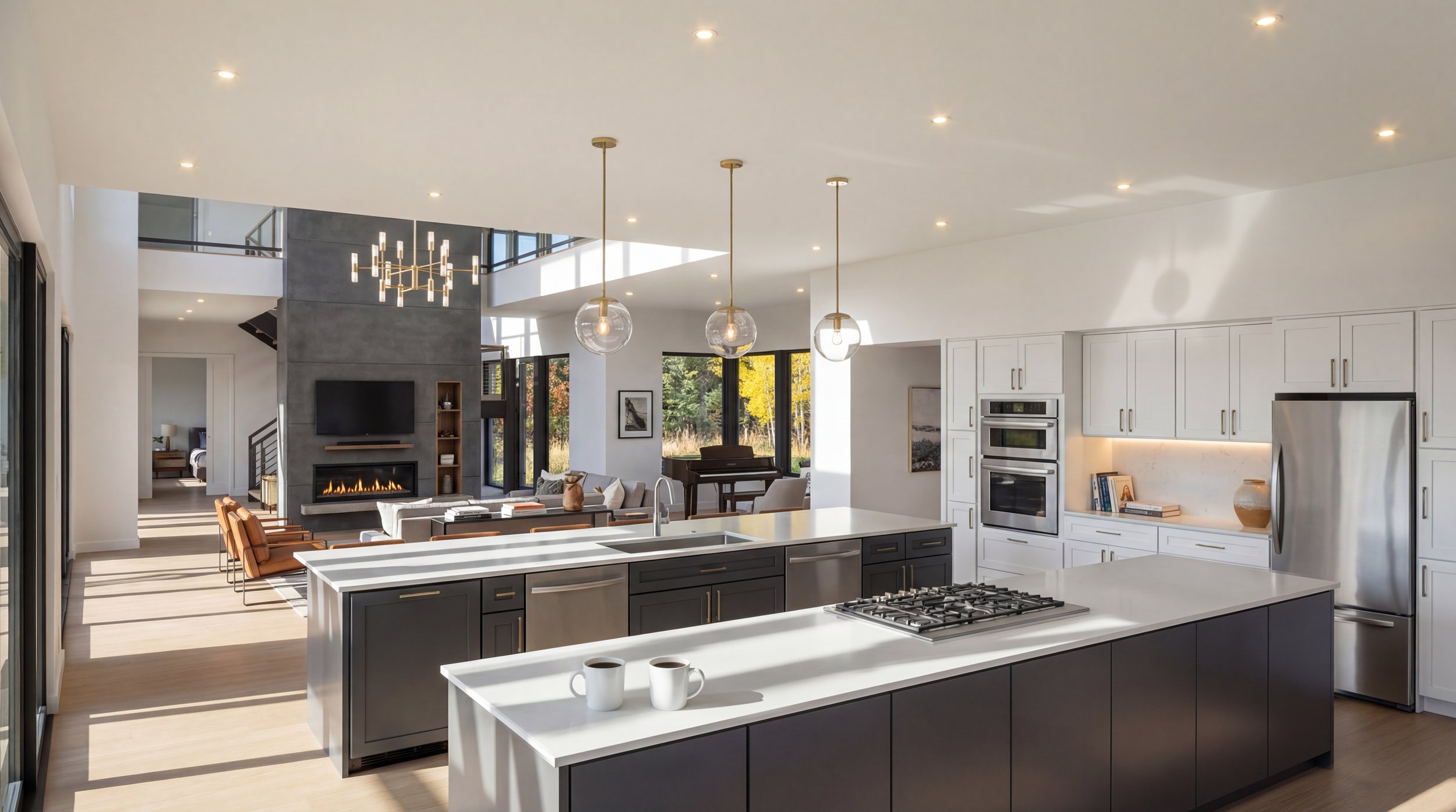
The Two Gables House in Auburn, WA by Terralite Design
One Vision, Two Disciplines
Our approach at Terralite Design is rooted in the belief that a home should feel like one complete idea. This starts at the very beginning of the process. While we are looking at the topography of a site in Leavenworth or the sun patterns on a lot in Suncadia, we are already thinking about where the dining table will sit and how the morning light will hit the kitchen island.
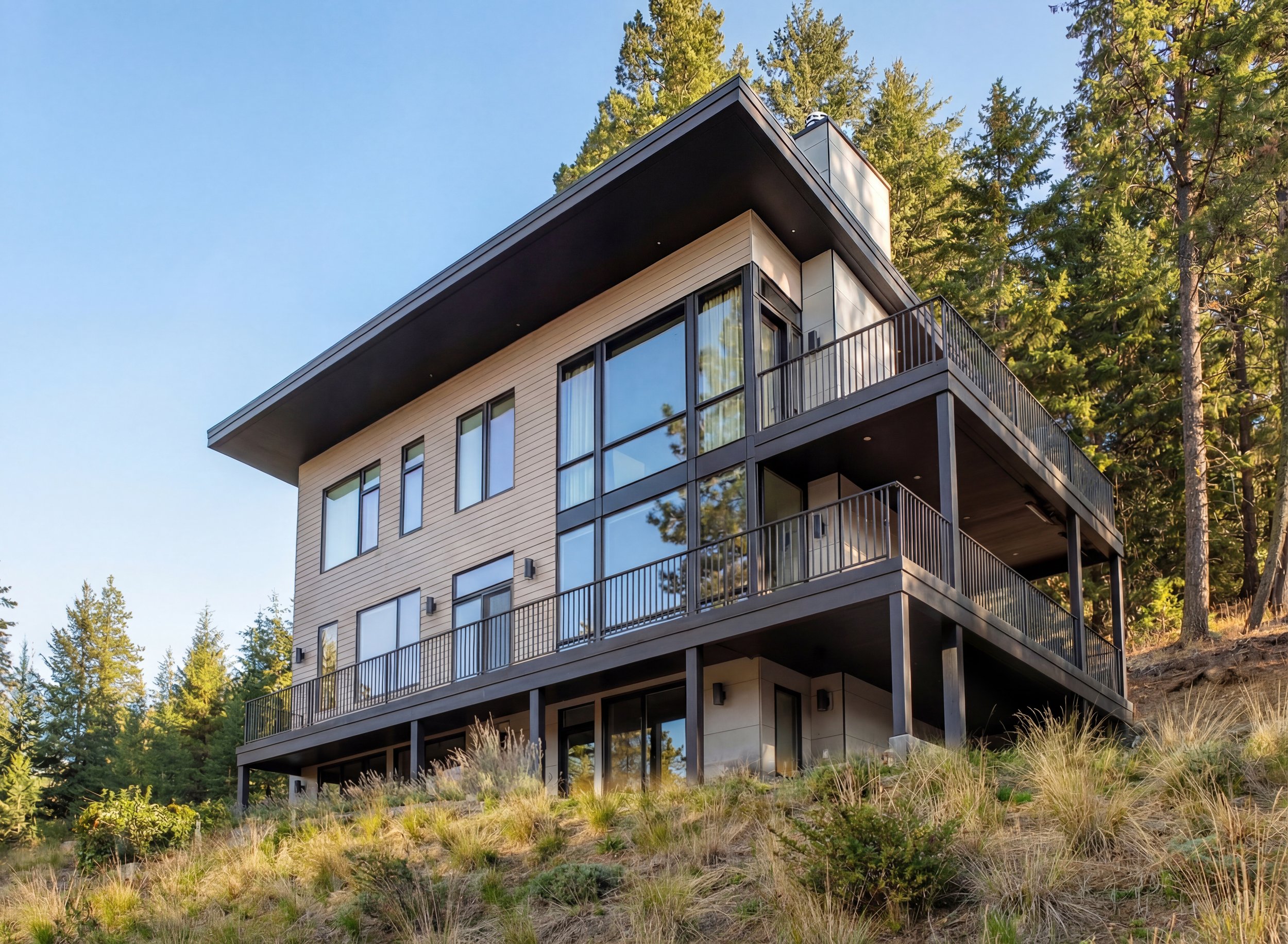
Take the Lakeview House as an example. The exterior design is a response to the steep hillside and the surrounding forest. But the "why" behind those massive windows and the orientation of the decks was deeply informed by the interior goals. We didn't just design a contemporary box and then try to fit a kitchen inside it. We designed the kitchen and the living spaces to dictate where the glass should go.
When you look at the Lakeview House from the outside, you see a structure that respects the land. But when you step inside, you realize the transition is seamless. The natural wood siding of the exterior finds its echo in the interior finishes, creating a sense of continuity that is difficult to achieve when two different teams are pulling in different directions.
Designing from the Inside Out (and Outside In)
A common mistake in residential design is treating the interior as "decorating." True interior design is about volume, light, and movement. It is as much about the placement of a wall as it is about the color of the paint. By integrating these services, we can make structural adjustments early on that benefit the interior experience.
If we know a client wants a specific view from their primary suite in Sandpoint, we don't just put a window in a wall. We coordinate the structural framing to ensure that the view is framed perfectly from the height of the bed. We think about where the electrical outlets need to be for bedside lamps before the first stud is ever nailed. This level of detail is only possible when the team responsible for the "bones" of the house is the same team responsible for the "soul" of the house.
Reducing Friction in Construction
The most practical benefit of an integrated team is the reduction of conflicts during the build. Construction is a complex puzzle, especially in mountain regions like Cle Elum or Ronald, where the elements and the terrain are already challenging enough.
When our team handles the full scope of the project, our construction documents are more comprehensive. We aren't just handing off a set of plans to a contractor and wishing them luck. We are providing a roadmap where the plumbing, mechanical, and structural elements are already coordinated with the cabinetry and the tile layouts.
This means fewer questions from the contractor and fewer "we have a problem" phone calls to the homeowner. It allows the builder to focus on craftsmanship rather than problem-solving on the fly. You can see our full range of integrated services on our what we do page, where we outline how this holistic approach benefits every phase of the project.
Materials and the Natural Environment
In the Pacific Northwest, the landscape is the most important room in the house. Whether we are designing in the dense forests of the Cascades or the open vistas of Idaho, we select materials that bridge the gap between the built environment and the natural one.
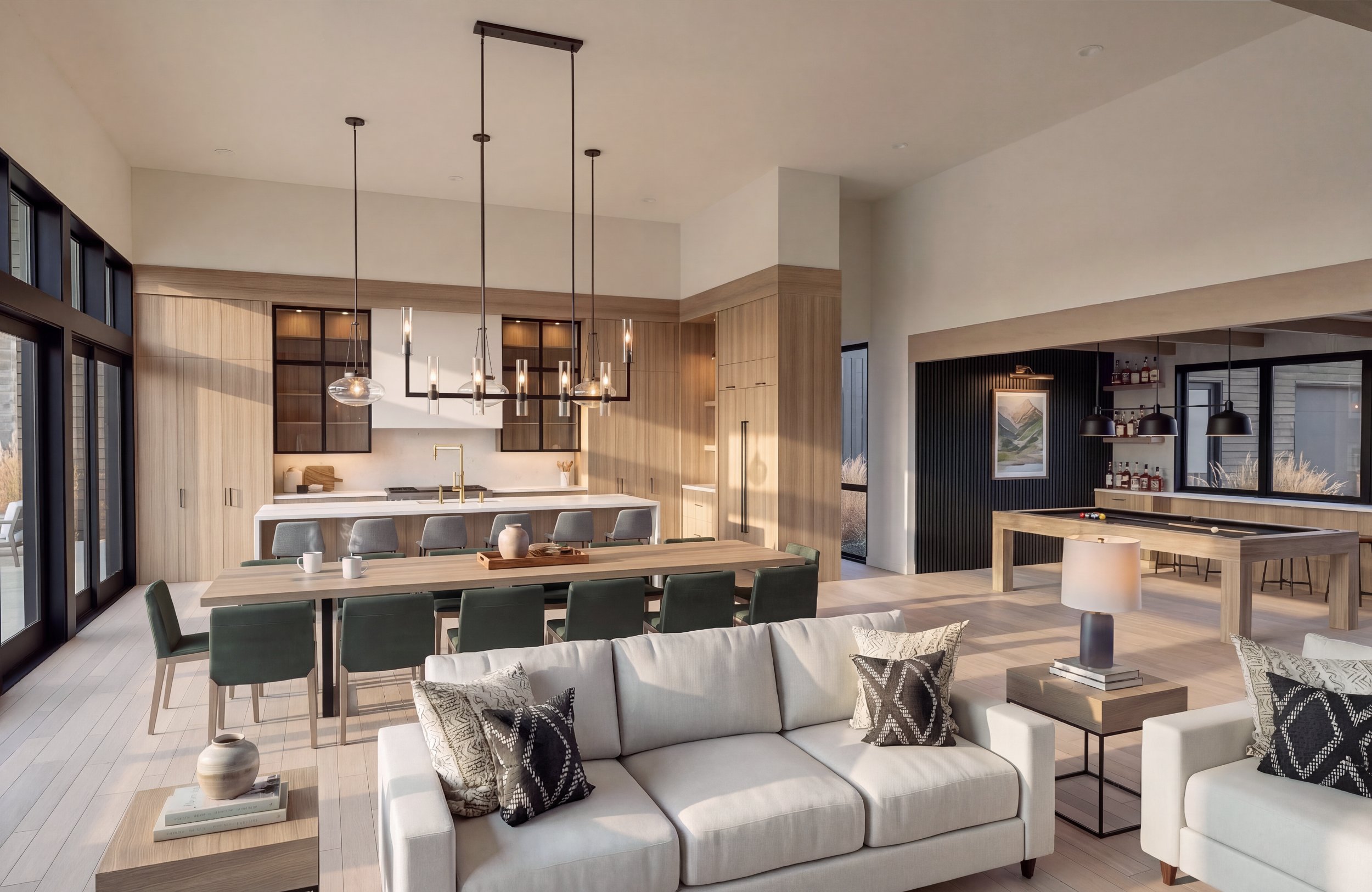
The Meadows House in Tumble Creek at Suncadia by Terralite Design
Having our interior team involved from the start means that the material palette is consistent. We choose stones, woods, and metals that handle the exterior elements of a mountain winter but still feel warm and tactile when used in a living room or a kitchen. This prevents the "theme park" effect, where the outside of a house looks like a mountain cabin but the inside looks like a sterile suburban office. We aim for a design that feels rooted in its place.
The Homeowner Experience: One Point of Contact
Beyond the technical and aesthetic benefits, there is the simple matter of your sanity. Designing a home is a major life event. It involves hundreds of decisions and a significant financial investment. Having a single team as your primary point of contact simplifies everything.
Instead of managing two different contracts and two different schedules, you have one partnership. We hold the vision for your home from the first site visit until you move in. If you have a question about how the lighting in the great room will affect the exterior aesthetic at night, you only have to ask one person.
This unified approach allows us to be better stewards of your budget and your time. We can prioritize the elements that matter most to you, ensuring that the "must-haves" for the interior are supported by the structural design from the very beginning.
A Complete Idea
At the end of the day, our goal is to create a home that feels like it was meant to be exactly where it is. A house should not feel like a collection of separate parts; it should feel like a single, cohesive thought. By bringing architecture and interior design into the same room, we remove the barriers that stand in the way of that goal.
If you are ready to start planning your project in Snoqualmie, Suncadia, or beyond, we invite you to look through our featured projects to see the results of this integrated approach. When you are ready to talk about your vision, you can reach out through our contact page or start the conversation by filling out our client questionnaire.
Building a home is a massive undertaking. It’s better when everyone is on the same page, literally.
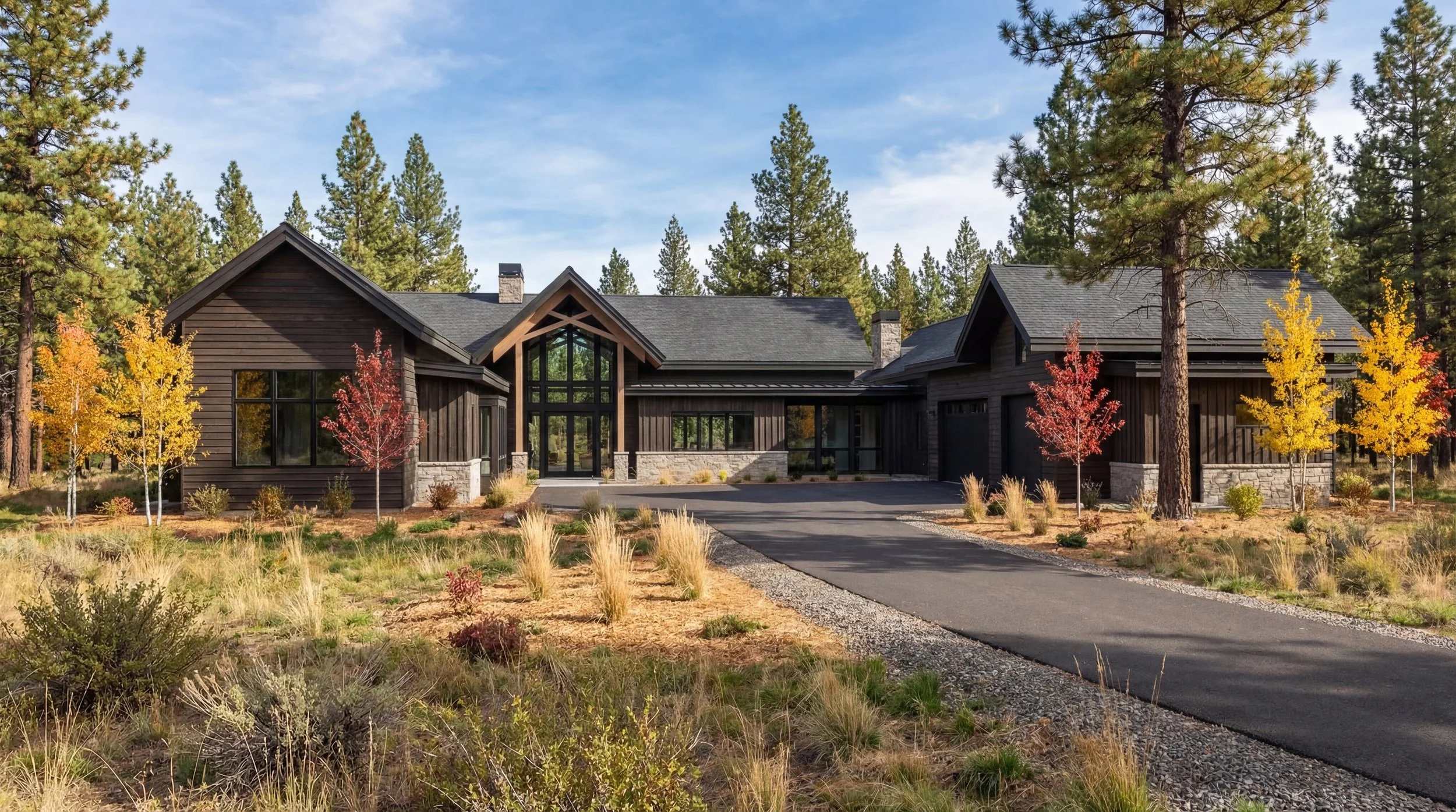
Suncadia & Tumble Creek: Why Local Design Experts are Key
Looking for Suncadia custom home design and Interior Design? Our local residential design experts specialize in Tumble Creek and Suncadia projects. We navigate complex Design Review Guidelines and Suncadia DRC review process to create cohesive and modern PNW mountain homes. From the Meadows House to your dream retreat, see why local expertise is key for your next custom home design in Cle Elum.
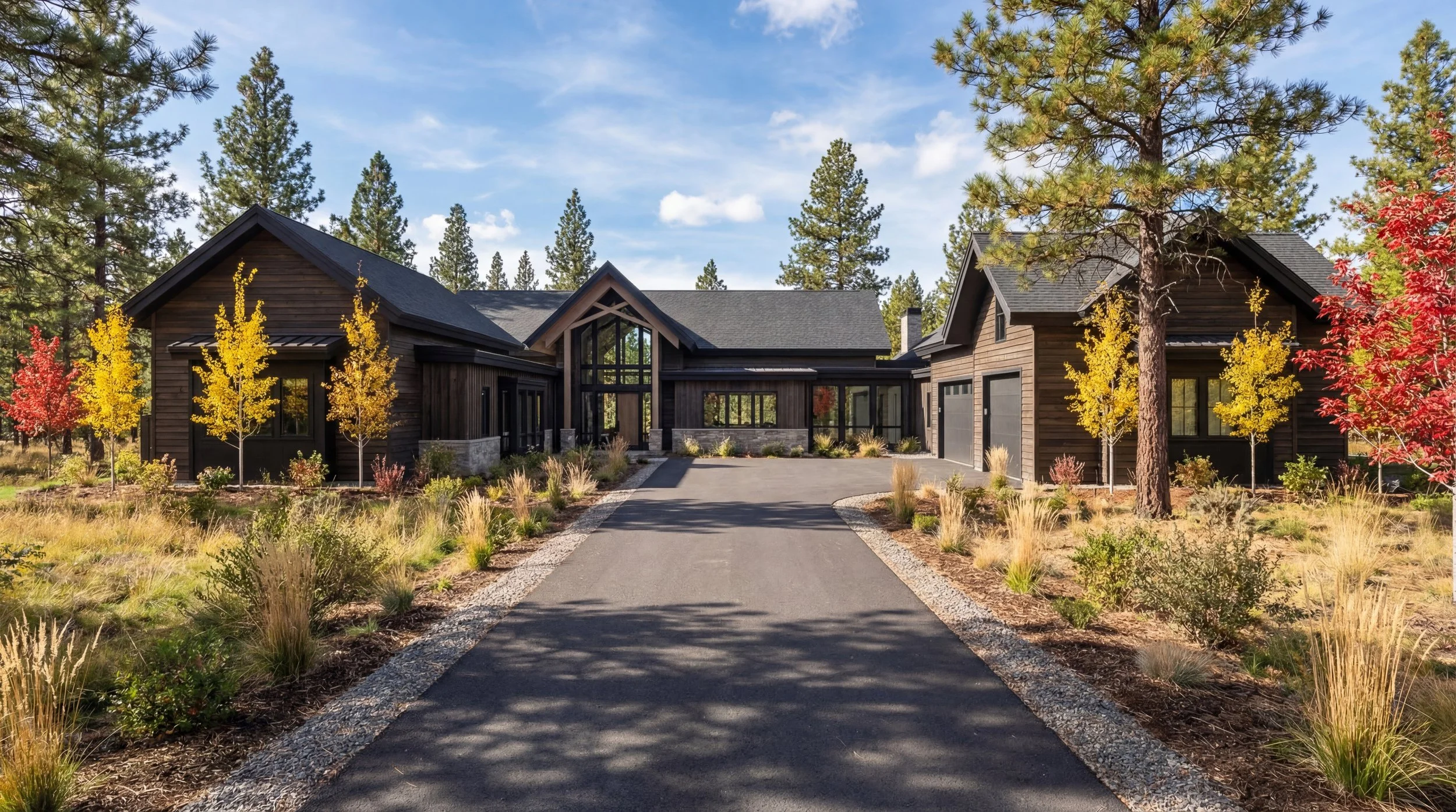
The Meadows House at Tumble Creek in Suncadia, WA by Terralite Design
Building in Suncadia can feel like planning a relaxed weekend in the mountains, right up until you meet the Design Review Guidelines. Then it starts to resemble a wilderness map drawn by committee.
The good news is you don’t have to figure it out alone. For Suncadia custom home design and Tumble Creek custom homes, choosing a local design team is less “nice to have” and more “quietly essential.” Not because outsiders can’t design a beautiful home. They can. But Suncadia and Tumble Creek are specific places with specific expectations, and the difference between a smooth process and a slow-motion headache often comes down to one thing:
Local experience that’s already paid for in lessons learned.
Below is why a local designer matters, how a deep understanding of Suncadia’s design review process protects your timeline (and your sanity), and why having interiors in-house is the easiest way to end up with a home that feels like one cohesive idea instead of a group project.
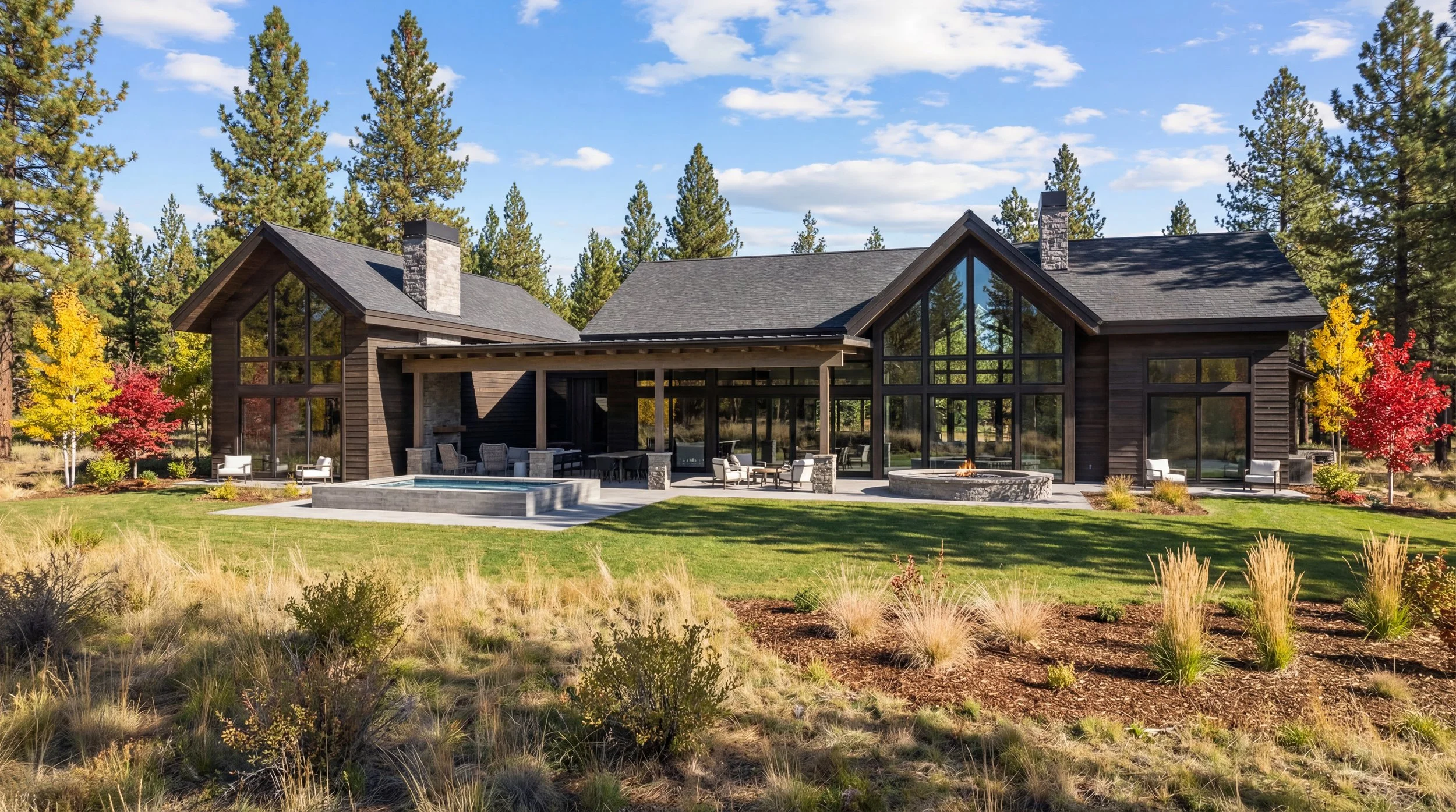
The Meadows House at Tumble Creek in Suncadia, WA by Terralite Design
Suncadia and Tumble Creek aren’t “just another mountain community”
At a glance, it’s easy to lump Cle Elum, Ronald, and Suncadia into the same bucket: evergreens, snow, sunshine, and a lot of people trying to earn their view. But Suncadia and Tumble Creek have a defined identity. There’s an underlying language to the neighborhoods and streetscapes, and it shows up in:
Rooflines and massing that sit comfortably against the landscape
Material palettes that feel grounded and regional
Windows and outdoor spaces that balance privacy, glare, and views
A general expectation that homes should look like they belong here, even when they’re distinct
A local design professional doesn’t just understand the vibe. They understand the boundaries of it. That means you can push for a home that feels personal and refined without accidentally designing something that reads as out of place in this environment.
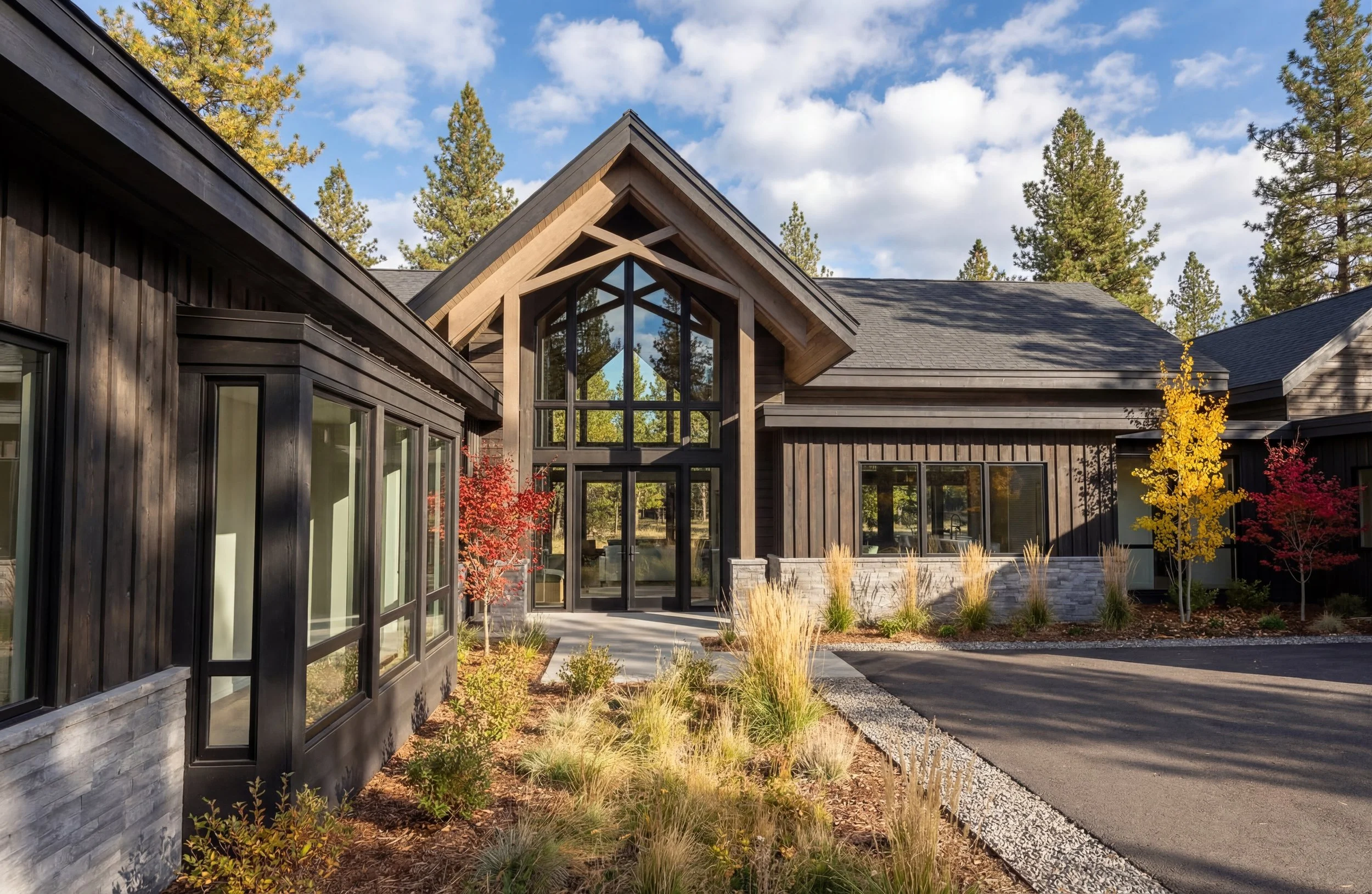
The Meadows House at Tumble Creek in Suncadia, WA by Terralite Design
The Suncadia Design Review Guidelines: a maze with real consequences
Most homeowners assume the biggest “approval hurdle” is the county permit. In Suncadia and Tumble Creek, the bigger day-to-day reality is the Design Review process. It’s not optional. It influences decisions from the early concept stage through the details you’d swear no one would notice (until they do).
A local designer brings something underrated: pattern recognition. They know where projects typically get slowed down, what questions reviewers tend to ask, and how to present a design so it’s clear, complete, and aligned.
That saves you in three practical ways.
1) Fewer redesign loops
Design review is often where optimistic early ideas get tested. If your team doesn’t understand the guidelines, you can end up in a loop of revisions that feels like running uphill in snow.
Local experience helps keep early concepts realistic so you’re not paying to “learn” the rules midstream.
2) Cleaner decision-making early on
When the constraints are understood from day one, the design process is calmer. You can spend your time deciding what actually matters to you, rather than constantly reacting to corrections.
3) Less risk during construction
Design review misalignment doesn’t only affect the drawing set. It can spill into construction if changes are required late. Late changes are expensive changes.
The best-case scenario is a delay. The worst-case scenario is that you end up compromising the parts of the home you cared about because time ran out.
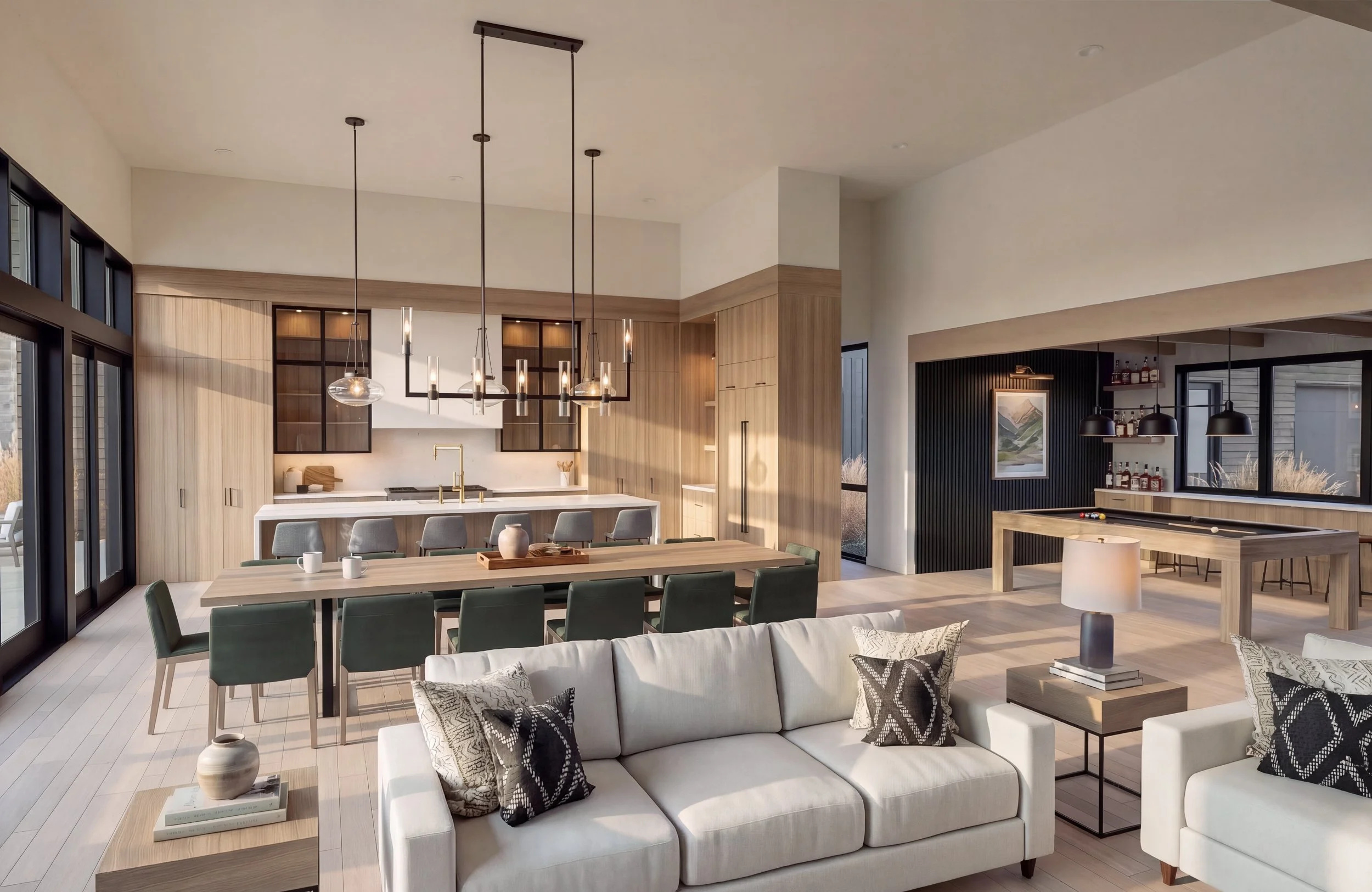
The Meadows House at Tumble Creek in Suncadia, WA by Terralite Design
Local site knowledge is not a bonus feature, it’s the foundation
Suncadia sits on the sunny side of the Cascades, which means the climate can be deceptively intense. You get real snow, real sun, and real seasonal shifts that affect how a home performs and how it feels.
Local design teams are used to thinking about:
Snow load implications and roof geometry that behaves well in winter
Sun angles that change dramatically through the year
Passive solar strategies that don’t create summer overheating
Durable exterior materials that age well in this exact mix of sun, moisture, and temperature swings
Site planning that respects slope, drainage, and access without fighting the terrain
It’s the difference between a home that looks great in a rendering and a home that stays comfortable, quiet, and low-maintenance over time.
And in communities like these, durability is part of beauty.
Tumble Creek adds another layer of expectations
Tumble Creek custom homes tend to sit in more intimate, forested settings. There’s often a stronger emphasis on blending into the natural surroundings, managing privacy, and respecting the community character.
A local designer is familiar with what typically works here:
Thoughtful entry sequences that feel tucked in, not exposed
Window placement that captures light without turning the home into a lantern for the whole street
Material choices that read warm and natural in wooded conditions
Outdoor spaces that feel protected from wind and seasonal weather
In other words, the design isn’t just about the house. It’s about how the house behaves in its specific pocket of forest.
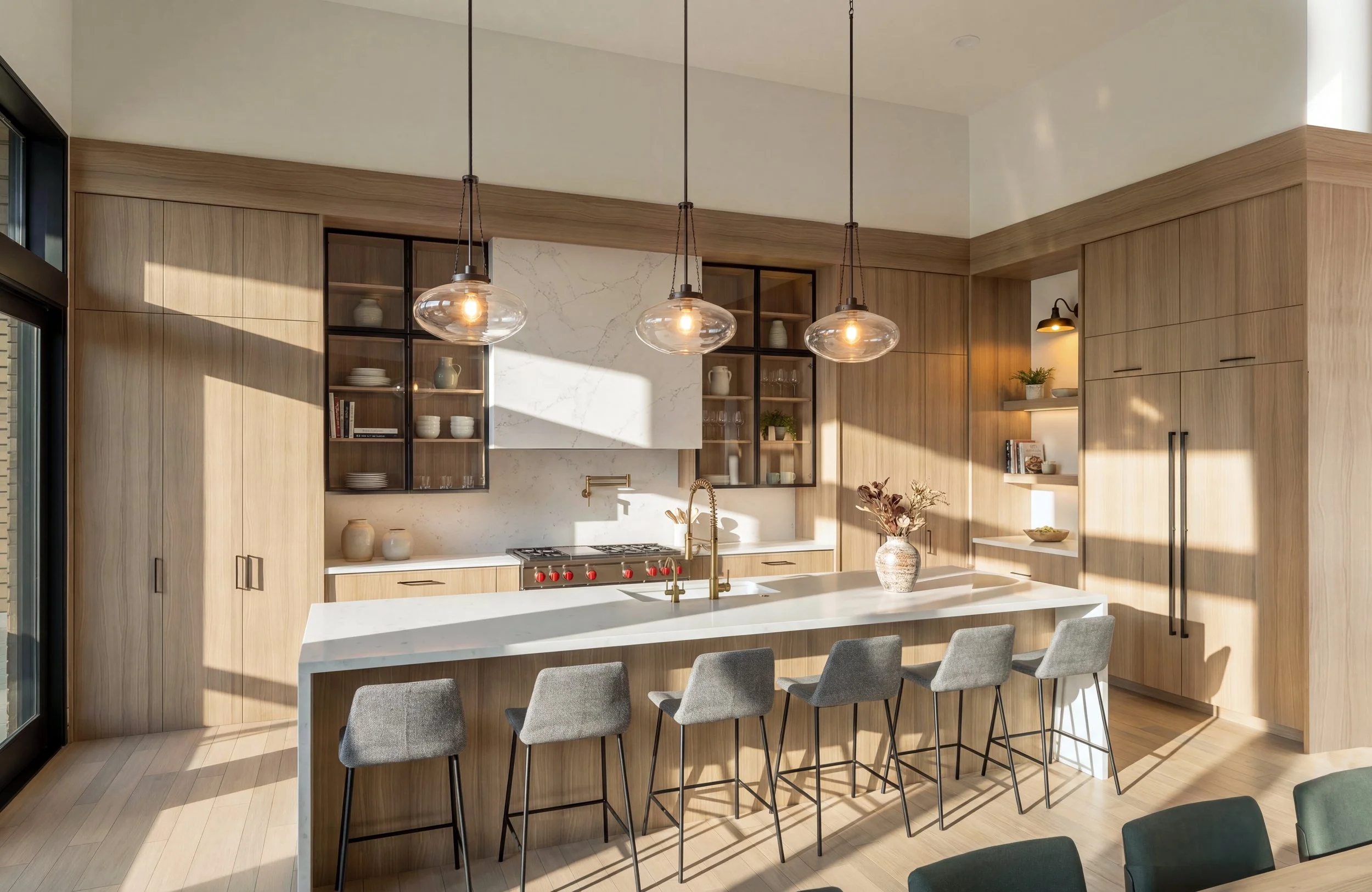
The Meadows House at Tumble Creek in Suncadia, WA by Terralite Design
Architecture + interiors under one roof: the cohesion you can feel
Here’s a common story: a design professional creates the shell, then an interior designer comes in later and “makes it pretty.” That can work, but in high-end mountain homes it often leads to one of two outcomes:
Interiors that fight the architecture
Interiors that are fine, but feel generic because they weren’t planned early enough
When your Suncadia custom home design team also provides interior design services in-house, you get a tighter loop from concept to completion. The payoff is more than aesthetics.
Cohesion shows up in the places that matter
Window sizing aligns with furniture layouts and lighting
Fireplace, built-ins, and kitchen planning are designed as architectural features, not afterthoughts
Material transitions are intentional from exterior to interior
The home feels consistent from the first sketch to the final details
Decisions happen earlier, when they’re cheaper and easier
Interior design isn’t just pillows and paint. It’s layout, circulation, cabinetry, lighting, plumbing fixtures, and storage. When those decisions happen early, they integrate cleanly with structure and mechanical systems.
That reduces construction hiccups. It also reduces the “why is this soffit here” surprises.
You avoid the “telephone game”
When architecture and interiors are separate teams, you can end up translating your preferences twice, then mediating conflicts you didn’t ask for. An integrated team reduces handoffs and keeps the vision intact.
This is especially valuable in Tumble Creek custom homes, where warm materials and layered details often carry the emotional weight of the space.
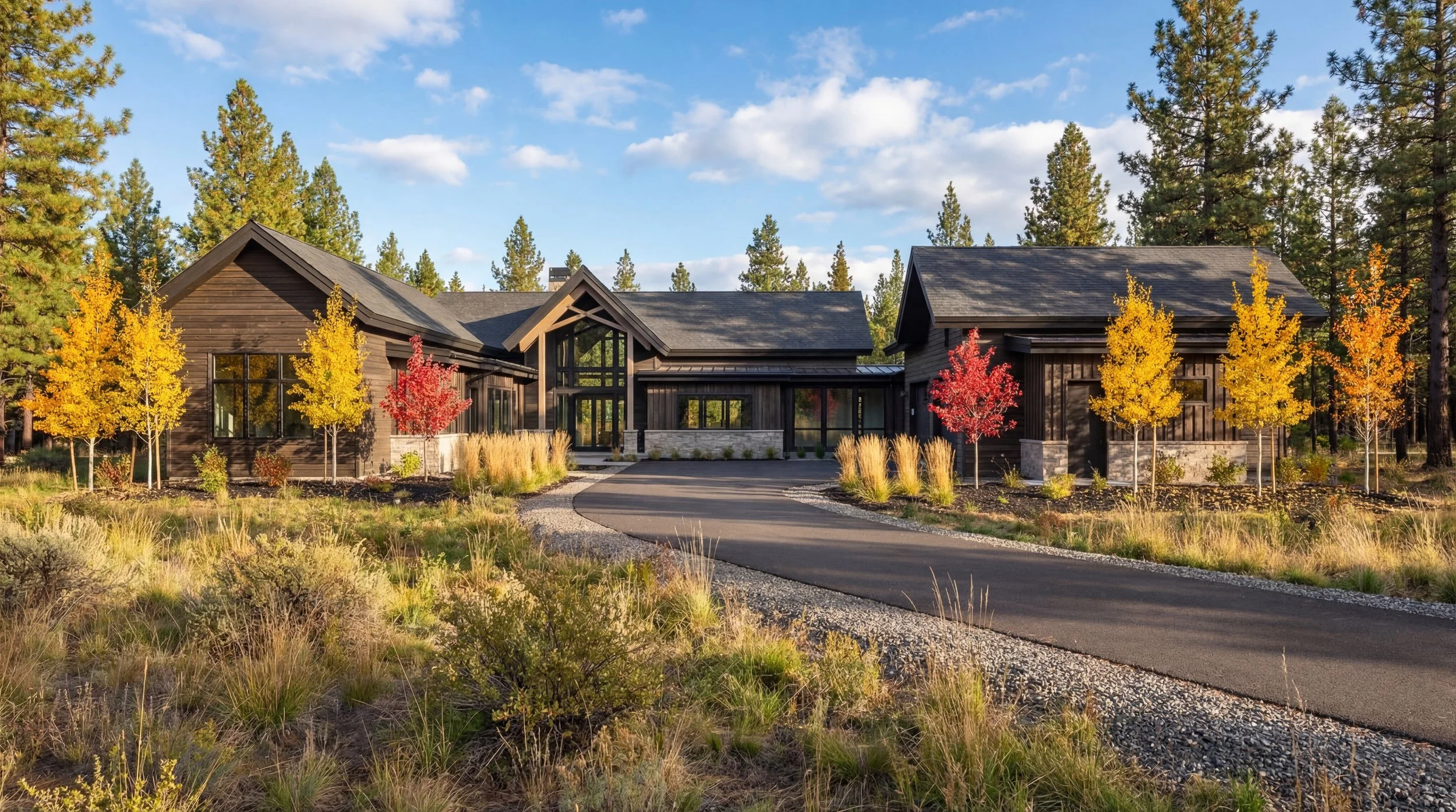
The Meadows House at Tumble Creek in Suncadia, WA by Terralite Design
A real-world example: The Meadows House at Tumble Creek
A mountain home should feel grounded and light-filled at the same time. That balance is hard to pull off without coordination between the building design and the interior design.
In The Meadows House at Tumble Creek, you can see what happens when the interior is treated as part of the overall architecture, not a separate overlay. The space reads calm and natural. Materials feel honest. Sightlines feel intentional. Nothing looks like it arrived late.
This kind of cohesion typically comes from making key interior choices early, including:
Where the warmth lives (wood species, tone, and finish)
How light moves through the home (natural light, layered artificial light, reflections)
How the public spaces relate to the quieter zones
How storage and built-ins keep the home feeling effortless rather than “managed”
The result is a home that holds up to daily use while still feeling elevated.
The hidden stress reducer: a local team that already speaks “review board”
Design review doesn’t just care about the finished design. It cares about how you get there. Submittals, documentation, and clarity matter.
A local design professional typically has a better internal checklist for what’s needed and when. That reduces stress in the most practical way possible: fewer last-minute scrambles, fewer incomplete submittals, fewer delays caused by avoidable gaps.
If you’re building from out of town (which many Suncadia homeowners are), this matters even more. You want a team that can carry the process forward without needing you to become a part-time project manager.
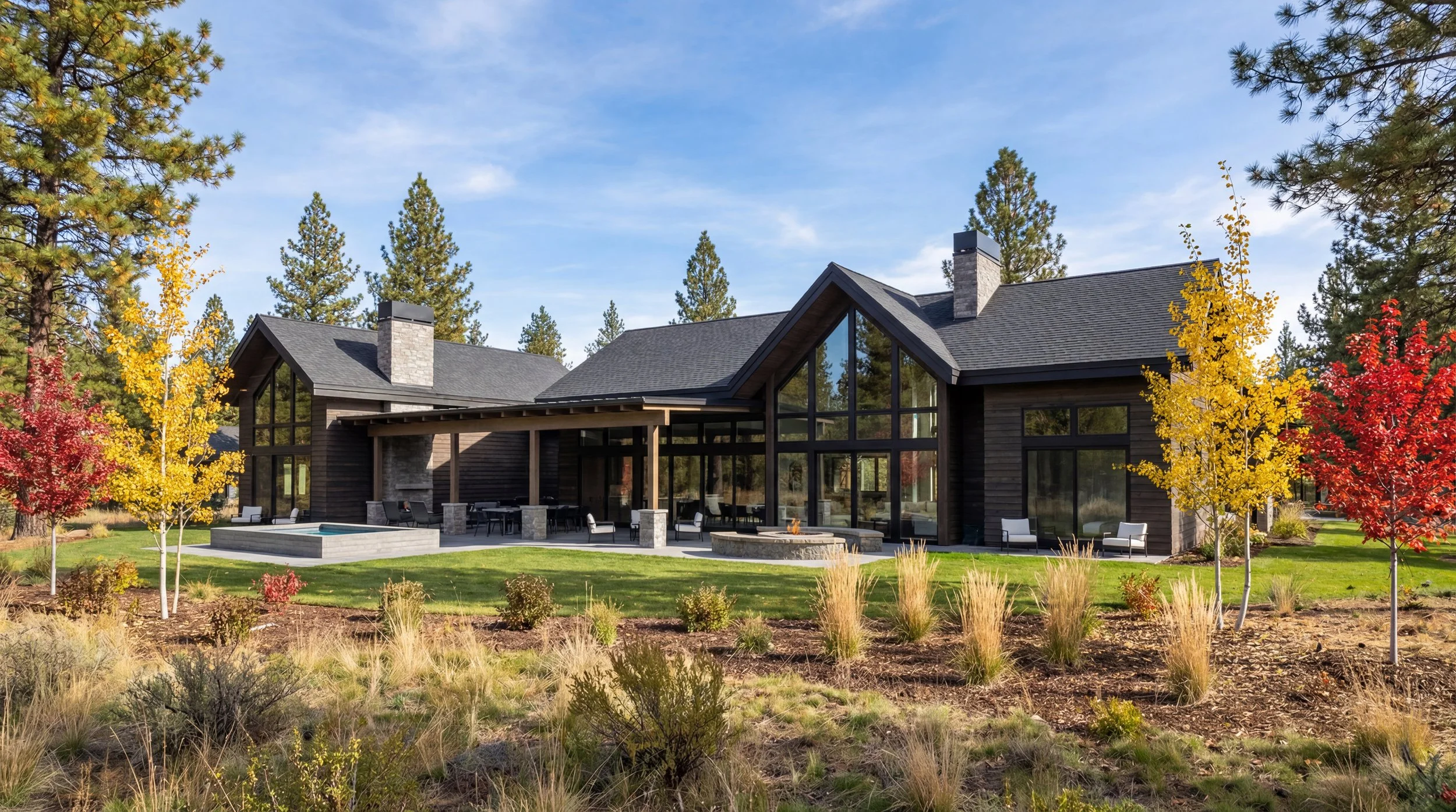
The Meadows House at Tumble Creek in Suncadia, WA by Terralite Design
What “local experience” actually looks like in your project
“Local” isn’t just a pin on a map. In practice, it looks like a team that can answer questions quickly and specifically, like:
How should we shape the roof to work with snow and still feel refined
What exterior materials age well here without turning into a maintenance hobby
Where do we put the big glass so it captures views without glare or overheating
What should we anticipate in design review so we don’t lose weeks later
How do we build warmth into the interiors without going full lodge-theme
Those aren’t theoretical questions. They show up early, and they stay relevant all the way through construction.
Why this reduces construction hiccups (and helps your builder)
When architecture and interiors are coordinated, and the design aligns with community guidelines from the start, your builder benefits too. That means you benefit.
Here’s where things get smoother:
Fewer change orders driven by late interior decisions
Better coordinated electrical and lighting plans
Cabinetry, tile, and trim details that fit the architecture without field improvisation
Cleaner scheduling because fewer “wait, we need to decide that” moments
Less rework caused by evolving design intent
You still have to make decisions. But you make them at the right time, with the right information.
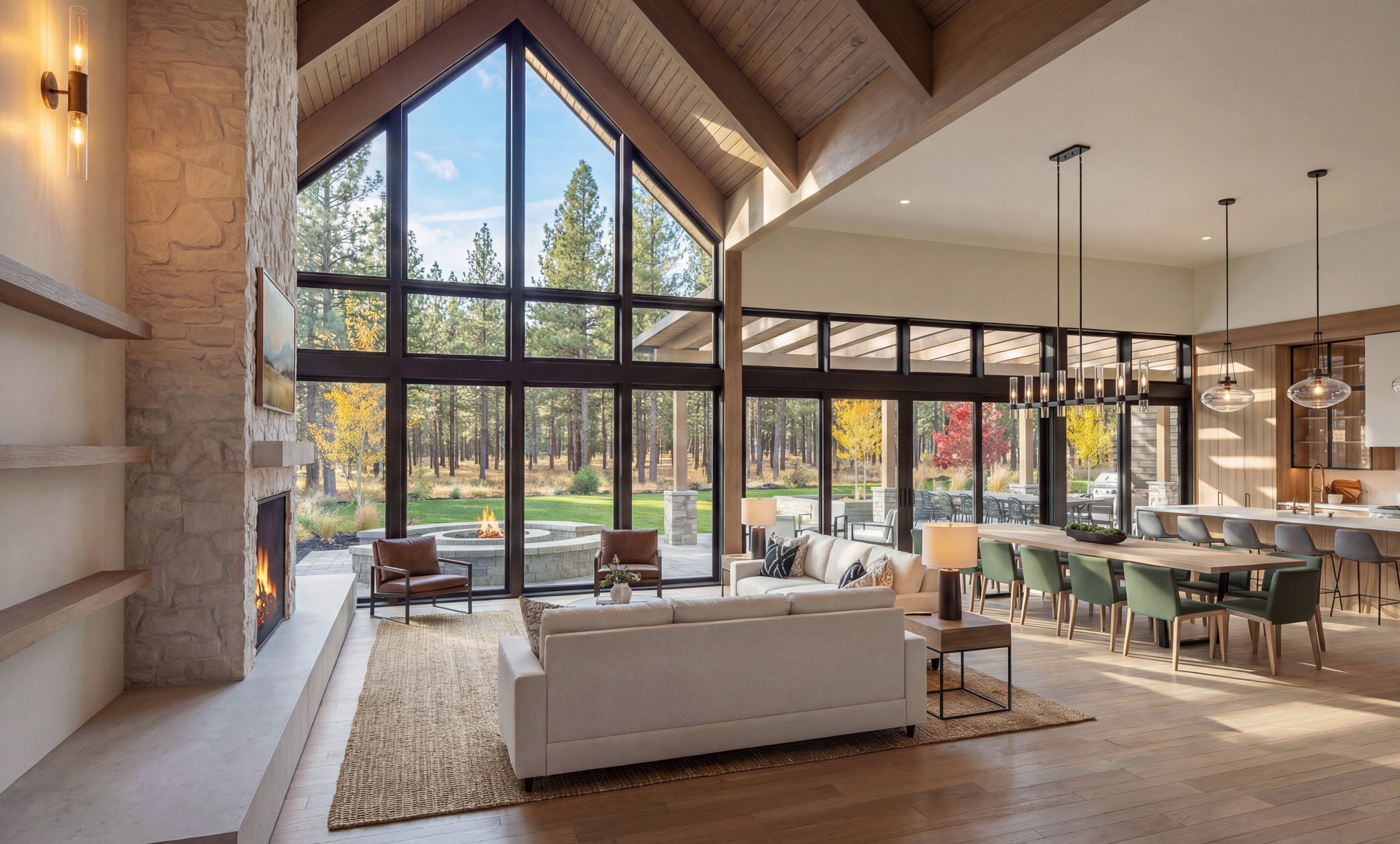
The Meadows House at Tumble Creek in Suncadia, WA by Terralite Design
Cohesive interiors are the difference between “nice house” and “feels like home”
High-end mountain homes live or die by feel. Not the Pinterest feel. The real one: the temperature of the materials, the way sound carries, the comfort of a seat near the fire, the way the kitchen works when eight people are in it at once.
In-house interior design helps hold onto that feel because the team is shaping:
The flow of everyday living (mudroom placement, pantry logic, entry moments)
The quiet luxuries (reading nooks, layered lighting, acoustic softness)
The material palette as a continuous story, not a series of isolated decisions
In Suncadia and Tumble Creek, where homes are often second residences, cohesion matters even more. You want to arrive, drop your bag, and immediately exhale. Good interior design is what makes that happen.
What to ask before you hire your Suncadia or Tumble Creek designer
If you’re comparing teams for Suncadia custom home design or Tumble Creek custom homes, here are questions that cut through the marketing quickly:
How many projects have you taken through Suncadia’s design review process?
At what stage do you coordinate interior design decisions like cabinetry, lighting, and plumbing fixtures?
How do you handle guideline-driven constraints without making the home feel generic?
What’s your approach to site planning for snow, sun, and views?
Who is responsible for maintaining design cohesion during construction?
You’re looking for calm, specific answers. If the responses are vague, the process may be vague too.
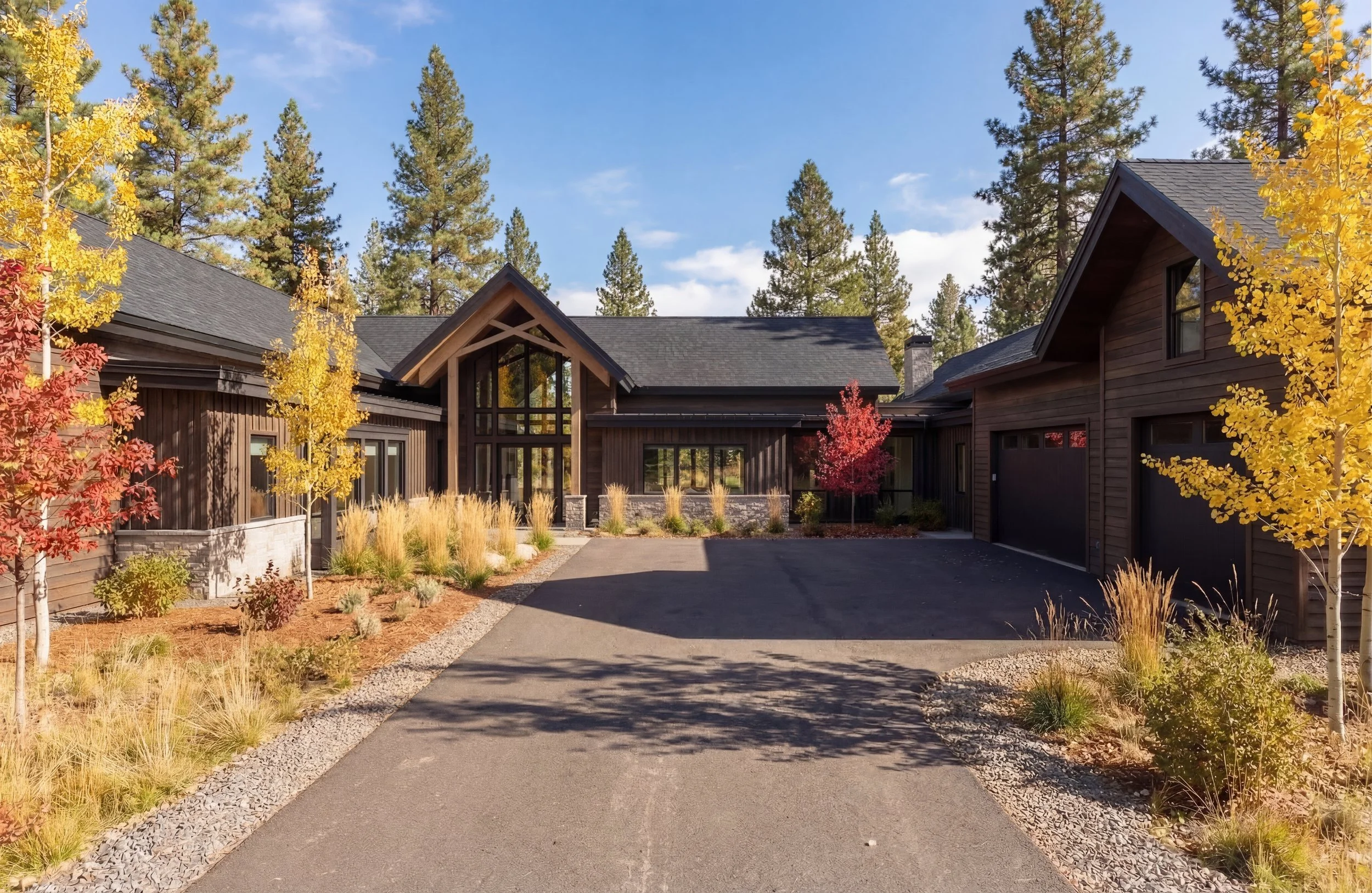
The Meadows House at Tumble Creek in Suncadia, WA by Terralite Design
Where Terralite Design fits in
Terralite Design is a residential design studio focused on high-end homes in Washington’s mountain and lake regions, including Suncadia, Tumble Creek, Cle Elum, Ronald, Snoqualmie Pass, and Leavenworth. We approach each project with respect for the landscape and a preference for timeless materials, natural light, and details that hold up to real use.
Just as important, we keep architecture and interior design aligned from the beginning. That means fewer handoffs, fewer surprises, and a home that feels like one clear idea when it’s finished.
If you want to see how that looks across different sites and styles, you can browse our work here: https://www.terralitedesign.com/featured-projects
The bottom line
Suncadia and Tumble Creek reward thoughtful design. They also punish guesswork.
A local designer with deep familiarity with the Suncadia Design Review Guidelines helps you avoid time-consuming detours, align early with community expectations, and make better decisions sooner. Pair that with in-house interior design, and you get a calmer process and a home that feels cohesive from the roofline down to the last finish.
If you’re planning a build and want a team that can guide the process with clarity, you can reach us here: https://www.terralitedesign.com/contactus
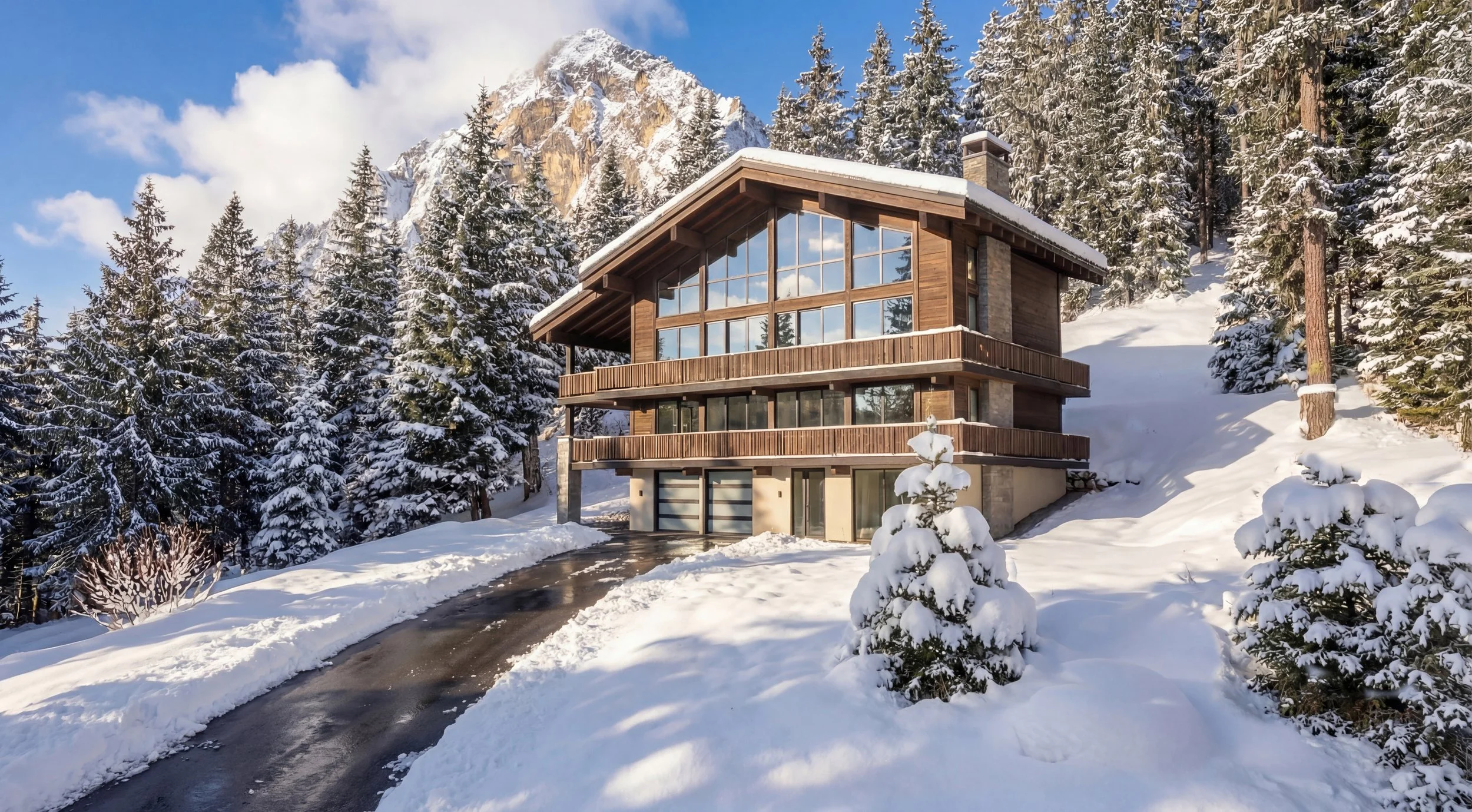
Designing for Steep Slopes and Mountain Winters: A Practical Guide for Pacific Northwest Homes
Building a home in the Pacific Northwest is often a pursuit of connection. We look for those quiet corners of Snoqualmie Pass, The Ponderosa treed hillsides of Cle Elum and Suncadia, the rugged ridges of Leavenworth, or the lakeside bluffs of Coeur d’Alene and Sandpoint because we want to live within the landscape, not just beside it. However, the very features that draw us to these locations: the dramatic elevation changes and the heavy winter snowfall: present a unique set of challenges for residential design.
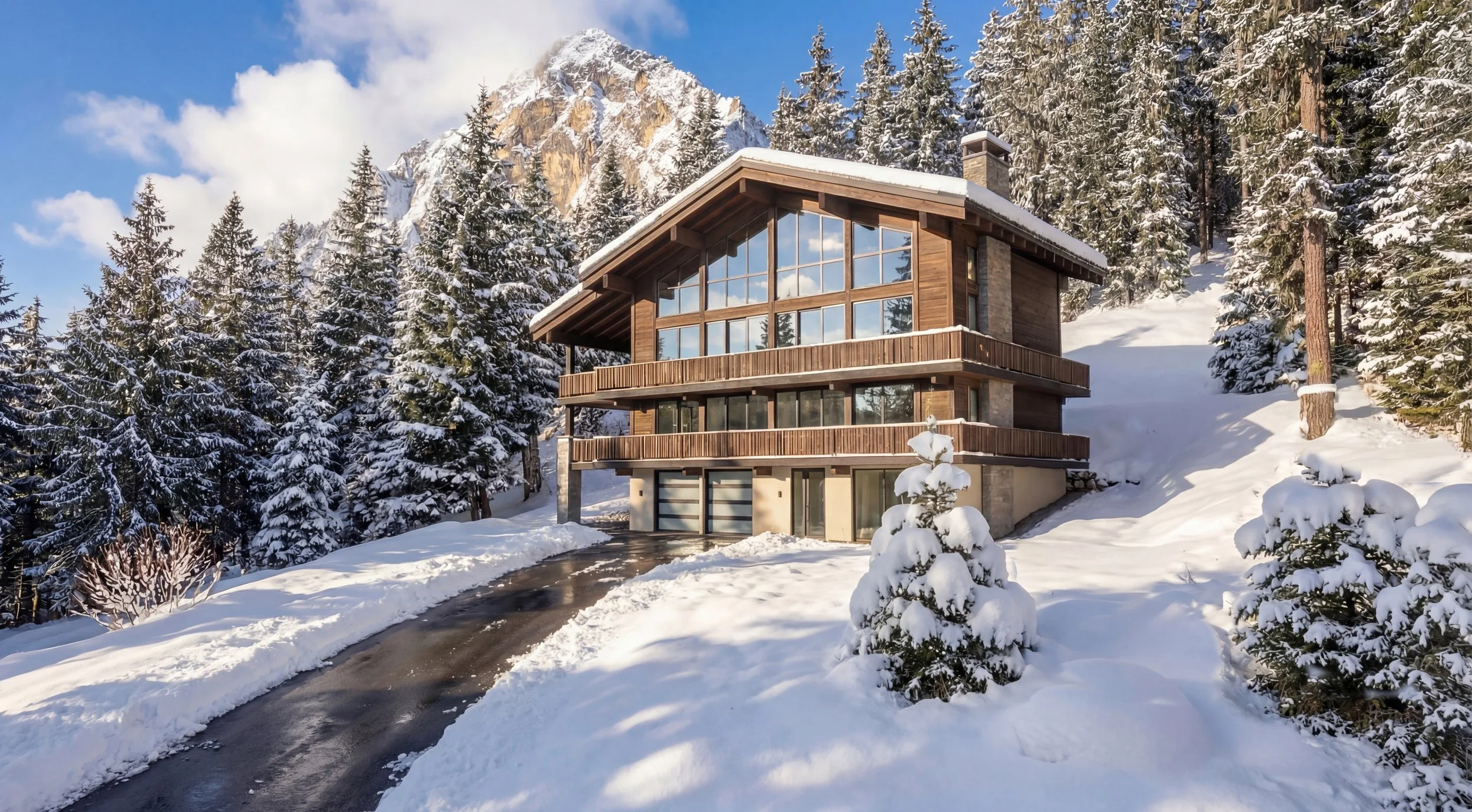
Building a home in the Pacific Northwest is often a pursuit of connection. We look for those quiet corners of Snoqualmie Pass, The Ponderosa treed hillsides of Cle Elum and Suncadia, the rugged ridges of Leavenworth, or the lakeside bluffs of Coeur d’Alene and Sandpoint because we want to live within the landscape, not just beside it. However, the very features that draw us to these locations: the dramatic elevation changes and the heavy winter snowfall: present a unique set of challenges for residential design.
At Terralite Design, we believe that a challenging site is an opportunity for more thoughtful, integrated design. When a lot drops forty feet from the road or sits under six feet of snow for four months a year, the design must respond with precision. It requires a deep understanding of how structures interact with gravity, weather, and the natural environment.
Working with the Terrain: The Art of the Slope
In mountain regions like Cle Elum and Ronald, the terrain rarely offers a flat building envelope. Traditional construction often attempts to fight the land, using massive retaining walls and extensive grading to create a level surface. Our approach is different. We prefer to work with the natural contours of the land, allowing the home to step down the hillside.
Designing for steep slopes starts with the entry experience. Depending on whether the lot is "upslope" or "downslope" from the access road, the home’s layout changes entirely. On a downslope lot, the top floor often acts as the primary entry and main living area, with private spaces tucked quietly below. This configuration preserves the view for the homeowners and ensures the structure does not dominate the ridgeline or obstruct the vistas of neighbors.
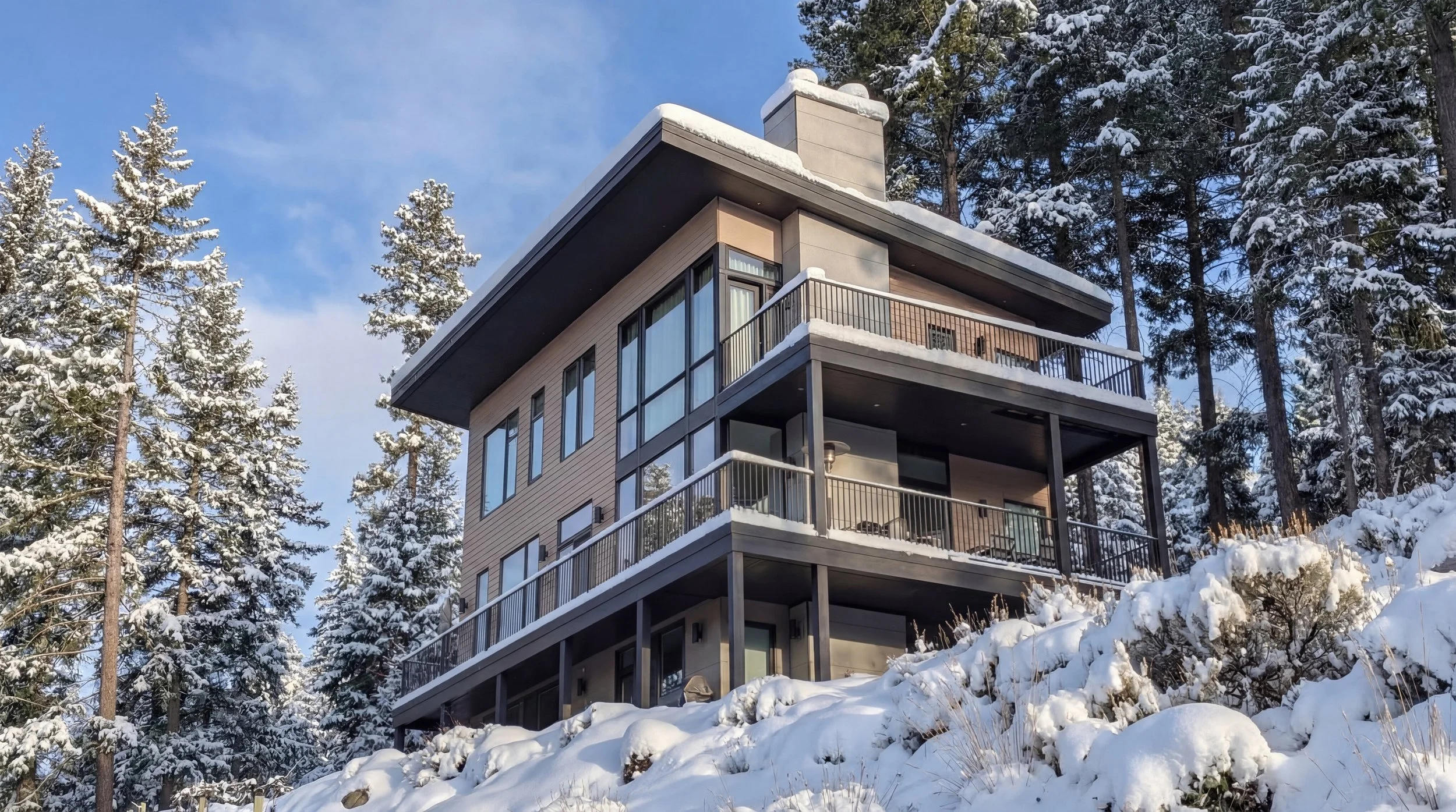
Using a multi-level floor plan helps minimize the footprint of the home on the earth. By stacking the living spaces vertically, we reduce the amount of site disturbance and preserve more of the native vegetation and old-growth trees. This verticality also creates a sense of living in the canopy, where every level offers a different perspective of the surrounding forest and mountains.
Engineering for the Mountain Winter
Winter in the Cascades or the mountains of North Idaho is a force to be respected. In areas like Snoqualmie Pass, snow loads are among the highest in the country. This environmental reality dictates every line of the roof and every choice of material.
A well-designed mountain home must manage snow shedding and ice buildup effectively. We often utilize metal roofing for its durability and its ability to shed snow quickly. However, where that snow falls is just as important as how it leaves the roof. Wide overhangs are a staple of our modern mountain living philosophy. These overhangs protect the home’s siding from moisture, keep entryways clear of falling ice, and provide a sheltered zone for outdoor movement during the shoulder seasons.
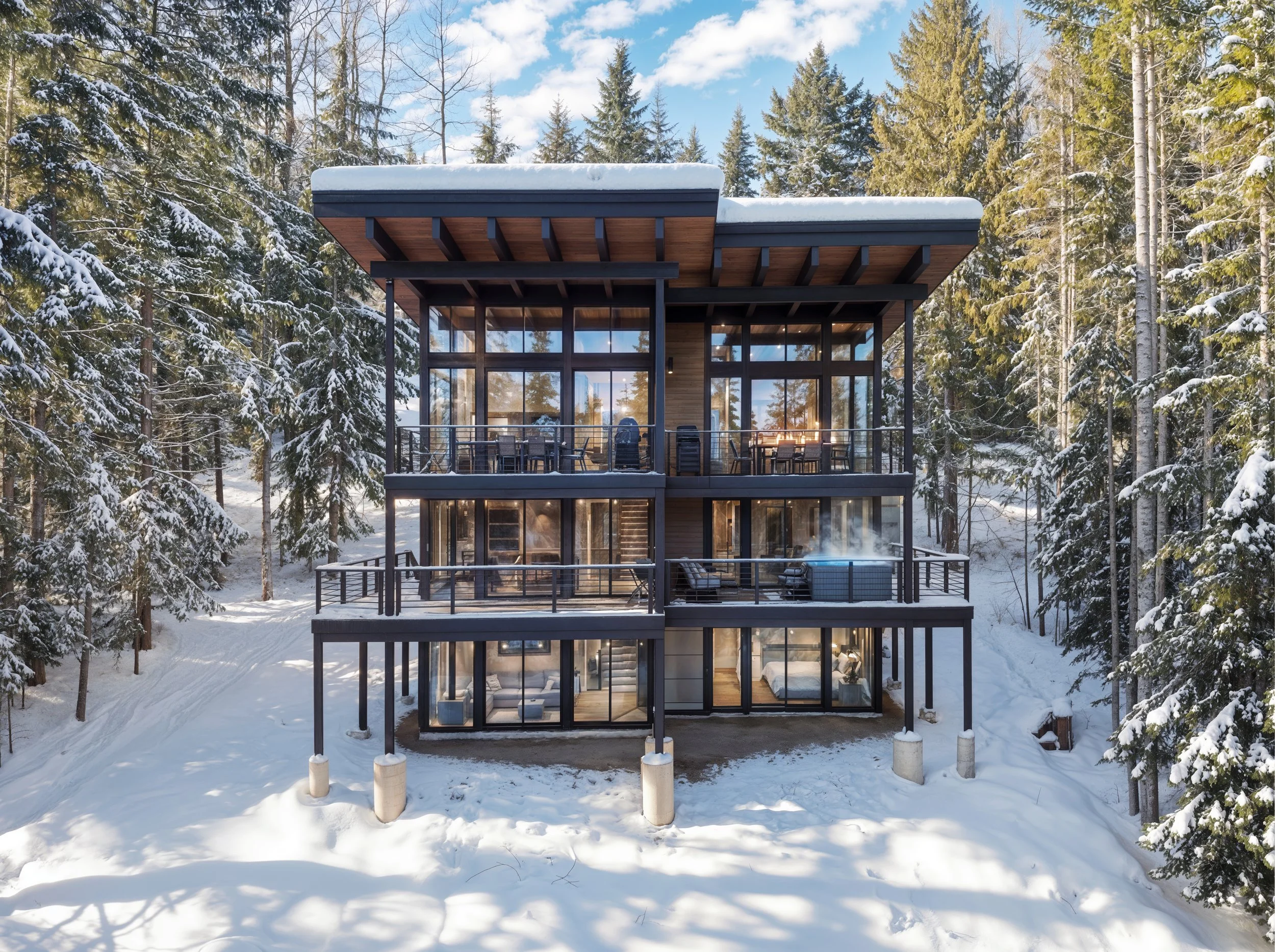
When the snow piles up against the foundation, material resilience becomes the priority. We lean on a palette of natural stone, concrete, and blackened steel for the lower levels of our designs. These materials anchor the house to the site and provide a rugged, weather-resistant base that handles the freeze-thaw cycles of the Pacific Northwest with grace.
Bridging the Gap: Access and Entry
One of the most complex aspects of steep-slope design is the physical connection between the road and the front door. Often, the grade is too steep for a traditional driveway or walkway. This is where the concept of the "bridge entry" becomes both a functional necessity and a dramatic architectural feature.
The Bridge House is a primary example of this approach. By utilizing a glass-walled entry bridge, we can span the gap between the driveway and the main structure. This allows the home to be set further back on the slope, improving privacy and optimizing the view. It also creates a transition period: a physical journey from the car to the sanctuary of the home: that allows the resident to leave the outside world behind.
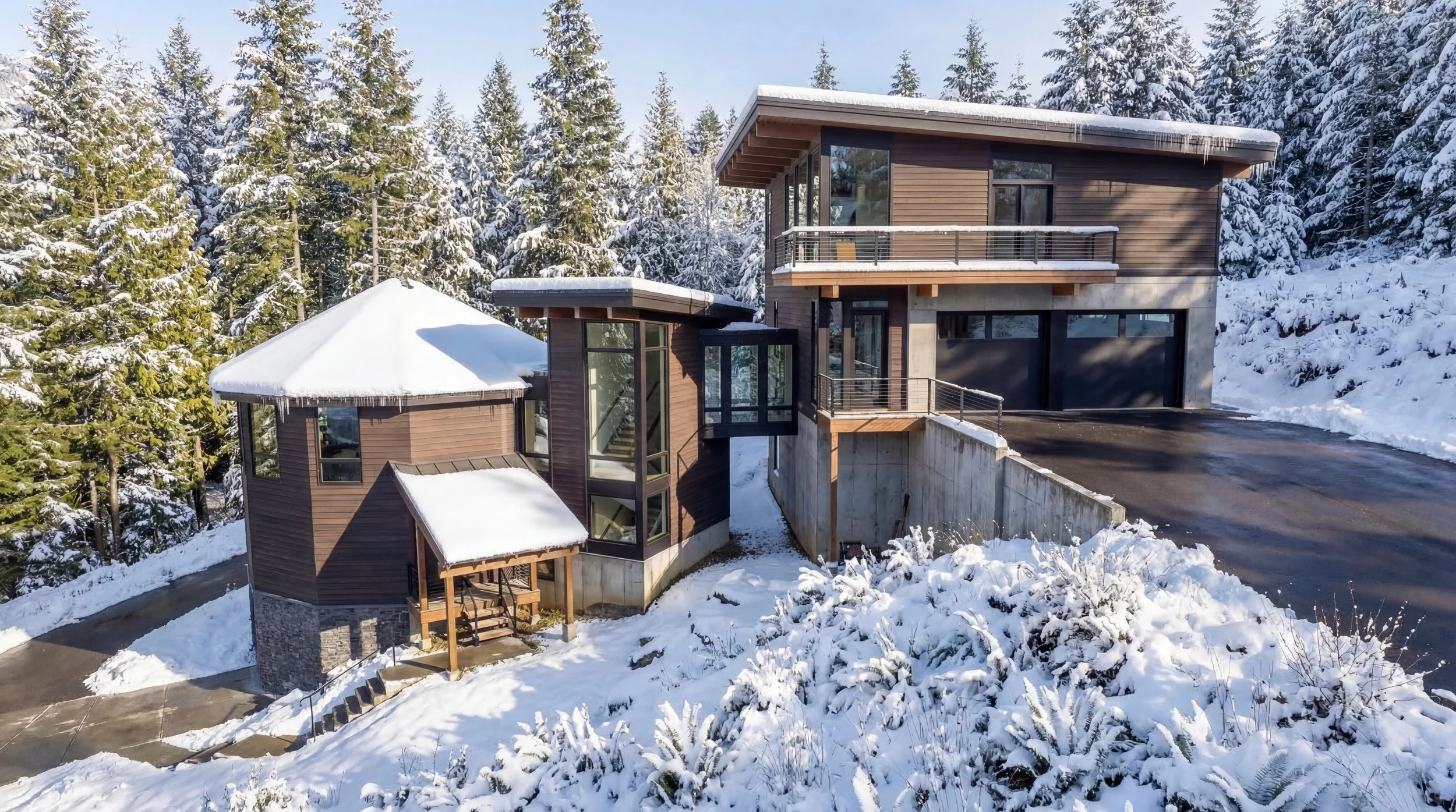
Planning for mountain access also means considering the practicalities of winter. Driveways must be engineered with manageable grades for snow removal equipment, and entries should be positioned to avoid "snow dump" zones from the roof. A thoughtful design professional will always look at the site through the lens of a February blizzard, ensuring the home remains accessible and safe regardless of the weather.
Exterior-Led Comfort: Daylight, Views, and Weather Protection
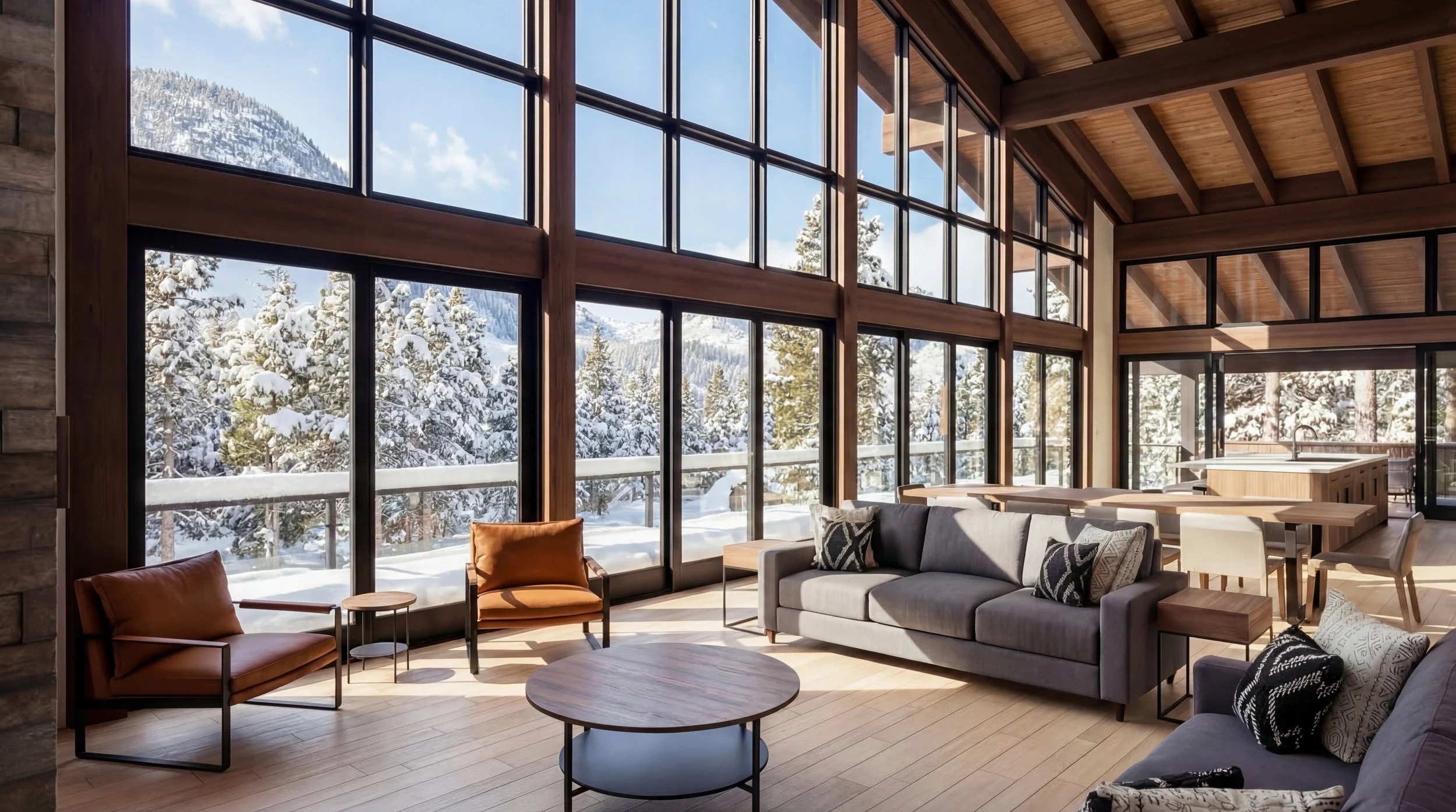
In the Pacific Northwest, winter isn't just about snow; it is about light and exposure. During the shorter days in Suncadia, Cle Elum, and Leavenworth, the most meaningful comfort starts outside, with glazing placement, overhang depth, and how the structure shields openings from wind-driven moisture.
We prioritize large-format windows where they can do real work: pulling daylight deep into the plan while staying protected by roof geometry, recessed walls, and properly sized overhangs. On harsh sites, that usually means concentrating the biggest glazing on the most protected elevations and designing roofs and decks to manage where snow and ice fall, rather than asking the facade to take the hit.
A Natural Material Palette
The goal of our work at Terralite Design is to create structures that look as though they belong to the land. This is achieved through a careful selection of materials that patina naturally over time.
Wood: Cedar siding and Douglas fir beams are classic Pacific Northwest choices. They offer a warmth that balances the coolness of the mountain air.
Stone: Using local stone to anchor the base of the house creates a sense of permanence and connects the structure to the geology of the site.
Metal: Blackened steel and metal roofing provide a contemporary edge and high-performance protection against the elements.
Glass: Large-format glazing is used strategically to frame views like art, turning the surrounding forest into the home’s primary decor.
Designing Your Mountain Legacy
Building on a steep slope or in a harsh climate is a significant undertaking. It requires a design team that understands the nuances of the Pacific Northwest and the technical demands of mountain construction. Whether you are looking at a site in the Snoqualmie Pass area or planning a retreat in Sandpoint, the process begins with a deep respect for the land.
We invite you to explore our featured projects to see how we have navigated these challenges for other clients. If you are ready to start the conversation about your own mountain home, we would love to hear from you. You can begin by filling out our client questionnaire or visiting our contact page to schedule a consultation.
The mountains offer a lifestyle defined by beauty and resilience. Your home should be a reflection of those same qualities: a sanctuary that stands strong against the winter and opens itself up to the vast, wild landscape of the Northwest. For more inspiration on residential design and living in harmony with nature, feel free to browse our blog.

Modern Mountain Living: Designing for the Elements in Snoqualmie Pass & Leavenworth
Modern Mountain Living: Designing for the Elements in Snoqualmie Pass & Leavenworth
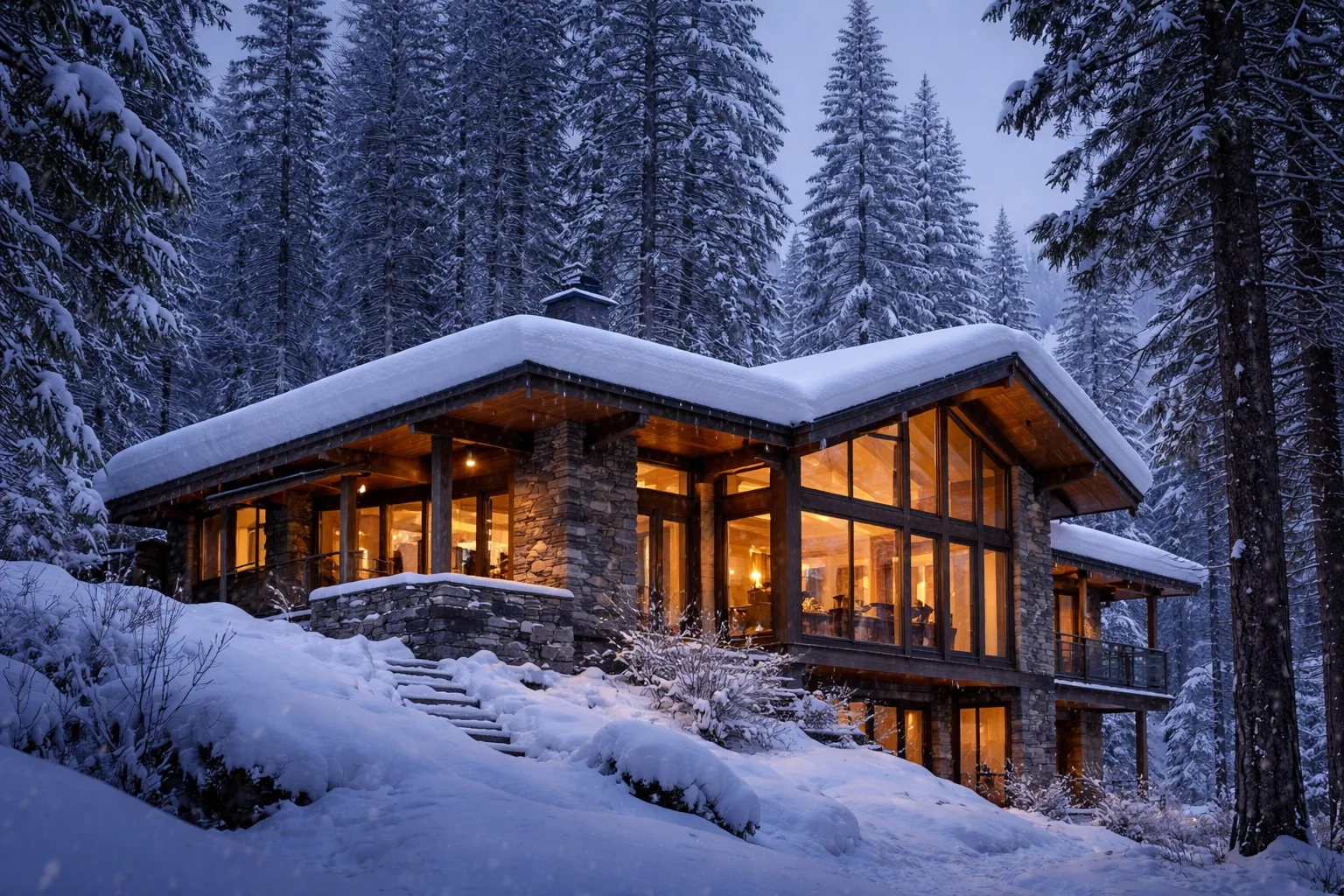
There is something deeply grounding about waking up to snow-dusted pines and the quiet weight of a mountain morning. The Cascade Range offers this kind of stillness: a landscape that demands respect and rewards those who build thoughtfully within it.
At Terralite Design, we have spent years studying the unique conditions of places like Snoqualmie Pass and Leavenworth. These are not locations where you simply drop a house onto a lot. They are environments that shape every decision, from foundation depth to roof pitch to window placement. And when you get it right, the result is a home that feels like it belongs: rooted in the earth, open to the sky, and built to endure.
This is what PNW mountain home architecture looks like when it is done with intention.
The Reality of Building at Elevation
Let us be honest about what you are signing up for when you choose to build in the Cascades. Snoqualmie Pass sits at roughly 3,000 feet, and Leavenworth is nestled at about 1,200 feet on the eastern slopes. Both experience significant seasonal shifts, but the challenges differ in important ways.
Snoqualmie Pass is one of the snowiest places in the lower 48. We are talking about annual snowfall that can exceed 400 inches in heavy years. That translates to snow loads that can reach 150 pounds per square foot or more on a roof: weight that must be accounted for in every structural calculation.
Leavenworth, while drier due to its position in the rain shadow, still sees substantial winter accumulation. Add to that the steep terrain common to both areas, and you are looking at sites that require careful grading, robust drainage systems, and foundations engineered for slope stability.
None of this is meant to discourage you. It is simply the truth of building in places this beautiful. And understanding these realities is the first step toward creating something exceptional.
Why Site Analysis Changes Everything
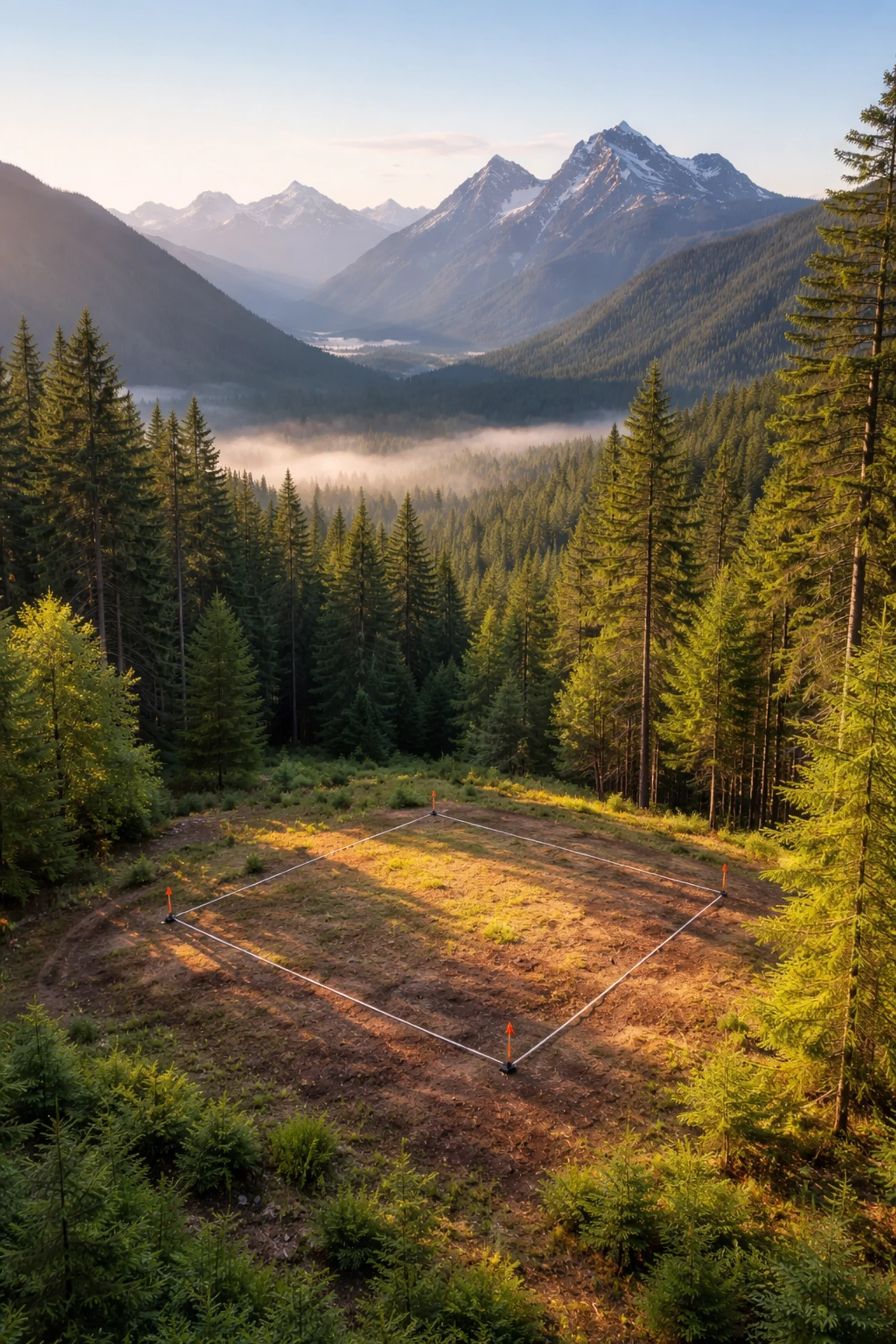
Before we sketch a single line, we walk the land. We observe how light moves across it through the seasons. We note where water flows during snowmelt. We identify the natural clearings and the stands of trees worth preserving.
This is the foundation of our earth-focused design process.
In Snoqualmie Pass modern cabin design, the site often dictates the footprint. A steep lot might call for a design that steps down the hillside rather than fighting against it. A south-facing slope offers passive solar gain that can reduce heating costs significantly: a meaningful consideration when winter temperatures regularly dip below freezing.
In Leavenworth, the considerations shift slightly. The terrain tends to be more varied, with meadows, forested hillsides, and river corridors all presenting different opportunities. A home designed for a site above the Wenatchee River will look and function differently than one tucked into the ponderosa pines above town.
The point is this: the land speaks first. Our job is to listen.
Designing for Snow Without Sacrificing Form
There is a common misconception that building for heavy snow loads means defaulting to a steeply pitched A-frame or a boxy, utilitarian structure. While those forms certainly handle snow well, they are not the only options.
Contemporary mountain architecture has evolved. Today, we can achieve clean, modern lines while still engineering for the realities of winter. The key lies in understanding how snow behaves and designing roof systems accordingly.
Shed roofs with strategic pitches can direct snow away from entries and outdoor living spaces. Metal roofing sheds snow more readily than composition shingles. And heated gutter systems prevent the ice dams that plague so many mountain homes.
Leavenworth luxury home design often incorporates flat or low-slope roof sections for visual effect, balanced by steeper elements that handle the heavy lifting. The result is a composition that feels both sophisticated and practical: architecture that respects the climate without being dominated by it.
Materials That Belong
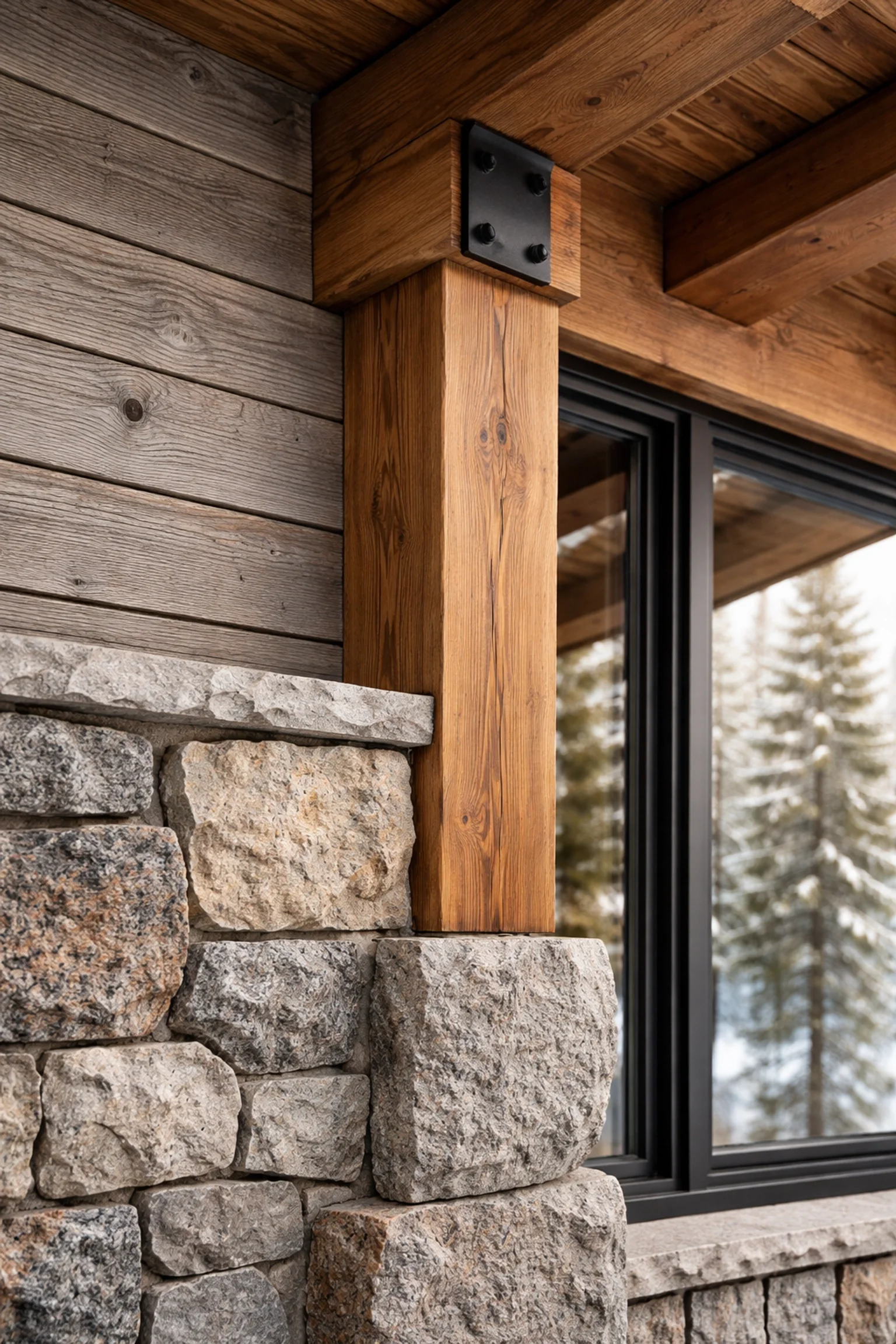
The Cascades have a material palette all their own. Granite outcroppings. Douglas fir and western red cedar. Basalt and river rock. When we design for this landscape, we draw from it.
Natural, earthy materials do more than look appropriate: they age gracefully. A weathered cedar siding will silver over time, blending with the surrounding forest. A stone fireplace surround echoes the boulders scattered across the hillside. Concrete, used thoughtfully, provides thermal mass that moderates interior temperatures.
We favor materials that require minimal maintenance and perform well under temperature extremes. This means:
Standing seam metal roofing for durability and snow shedding
Triple-pane windows with thermally broken frames for insulation and comfort
Locally sourced timber where possible, reducing transport costs and environmental impact
Natural stone and concrete for mass walls that stabilize interior temperatures
The goal is not to fight the environment but to work with it. A home that feels forced into its setting will always feel uncomfortable. A home that emerges from it will feel like a refuge.
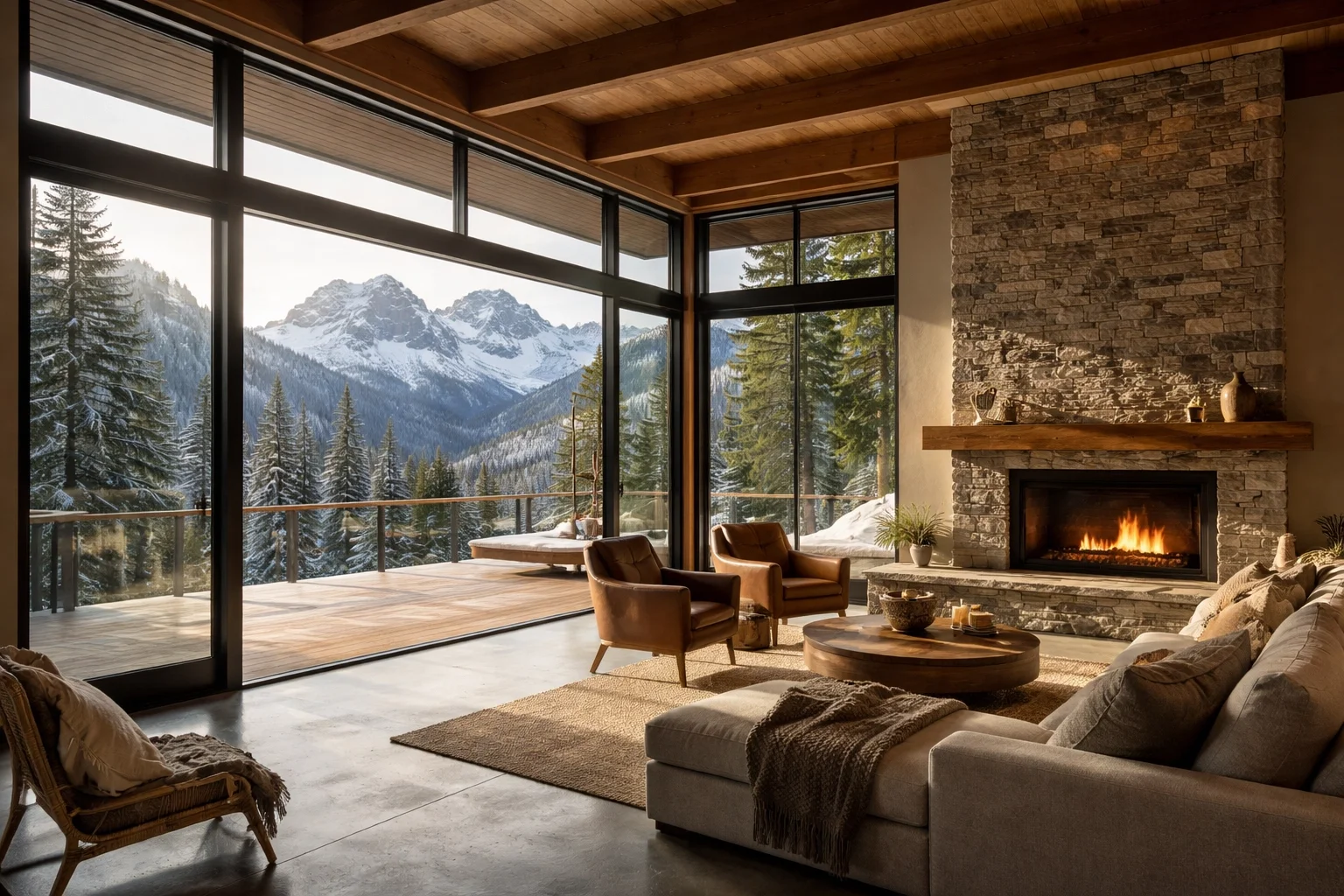
Bringing the Outside In
One of the great pleasures of mountain living is the landscape itself. The entire point of building here is to be surrounded by it: the evergreens, the granite peaks, the changing light.
Our approach to PNW mountain home architecture prioritizes this connection. Large windows frame specific views. Covered outdoor spaces extend the living area into the landscape while providing protection from rain and snow. Interior materials echo exterior textures, blurring the boundary between inside and out.
But there is a balance to strike. Too much glass on a north-facing wall means heat loss and cold drafts. Too little glass anywhere means missing the point entirely.
We study the sun path for each site. South-facing glazing captures winter warmth and is shaded by roof overhangs in summer. East-facing windows bring morning light into bedrooms. West-facing glass is used sparingly to avoid overheating in the afternoon.
The result is a home that feels open and connected without compromising comfort or efficiency.
Sustainability at Altitude
Building sustainably in the mountains is not a trend: it is common sense. Energy costs are higher. Resources are harder to transport. And the landscape itself is worth preserving.
We approach sustainability as a series of layered decisions:
Envelope first: A tight, well-insulated building shell reduces energy demand before you even consider mechanical systems.
Passive strategies: Orientation, window placement, and thermal mass work together to moderate temperatures naturally.
Efficient systems: When mechanical heating and cooling are needed, we specify high-performance equipment sized appropriately for the load.
Resilience: Backup power systems, on-site water storage, and durable materials ensure the home can weather extended storms and power outages.
In Snoqualmie Pass and Leavenworth alike, these strategies translate to lower operating costs, greater comfort, and a lighter footprint on the land.
Starting the Conversation
If you have been considering a home in the Cascades: whether a weekend retreat near Snoqualmie Pass or a full-time residence in Leavenworth: the process begins with understanding your site and your vision.
We would welcome the opportunity to walk the land with you, discuss your goals, and explore what is possible. You can learn more about our design process or reach out directly to begin a conversation.
The mountains are patient. They will wait for you to build something worthy of them.